Bagrationi History of the Georgian Royal Dynasty
The Bagrationi royal dynasty was the principal force shaping nearly all of Georgia’s political and spiritual life during the 9th-18th centuries. The dynasty represents one of the oldest and most distinguished Georgian noble lineages, which at various times ruled both united Georgia and, later, the kingdoms of Kartli, Kakheti and Imereti as they developed into independent monarchies. The name of the Bagrationi appears much earlier than the formation of the Georgian state as a unified entity, and from the 9th century onward they became the dominant political power in Georgia.
According to Georgian tradition, the origin of the Bagrationi dynasty is linked to divine, biblical roots. As the family legend states, “Georgian kings were born with the mark of an eagle on their right shoulder,” a symbol of their distinction and connection with God. Sumbat, son of David, links the dynasty’s origin to the genealogical line of the Prophet David, King Solomon, and Jesse, referring to the Bagrationi as “Jessean-Davidian-Solomonians.”
According to Georgian historical tradition, the crucifixion of Christ was attended by the Jews of Mtskheta, Elioz and Longinoz, who brought the Lord’s Tunic, the seamless robe of Christ, to Georgia. Possession of this holy relic gave exceptional significance to the Bagrationi dynasty. It emphasized the divine blessing of the kings and was reinforced both on the state coat of arms and in the royal title: “Georgia with the Royal Robe of David.” The harp and spear depicted on the coat of arms linked the dynasty to the biblical David, which was considered a symbol of the divine origin of the dynasty.
Along with the process of unification of Georgia, the official royal title was established: “King of Kings, of the Abkhazians, Iberians, Ranis, Kakhetians, Armenians, Shirvanshah, and Shahanshah”. This formula reflected the set of territories that the Bagrationi were successively unifying. Later, the honorific “The Sword of the Messiah” appeared in the titulature, assigning the kings the role of defenders of the Christian world.
Information about the Bagrationi’s biblical roots is preserved both in Georgian and foreign sources. Their origins are described by Juansher, “The Georgian Chronicles,” The Life of David, Vakhushti Batonishvili. Foreign sources include Byzantine Constantine Porphyrogenitus, as well as Armenian, Turkish, Russian and Italian authors, all of whom regarded the Bagrationi as a dynasty with a special connection to Jerusalem. In Georgia, there even existed a special tax called “Jerusalem tax,” which emphasized the dynasty’s devotion to the Holy City.
Despite the symbolic nature of the biblical legend, the historical roots of the Bagrationi dynasty begin in the
8th-9th centuries, when the family appeared in the Tao-Klarjeti Principality. Their political rise begins with the era of Ashot I the Great Kuropalates. Tao-Klarjeti was one of the most powerful political entities in Georgia at that time, and by the late 9th century it already bore the title “King of the Georgians.” Within the dynasty, two branches appeared, the Tao and Klarjeti lines, which governed the principality according to the principle of collegial rule. From this lineage descended Bagrat III, the first king of unified feudal Georgia.
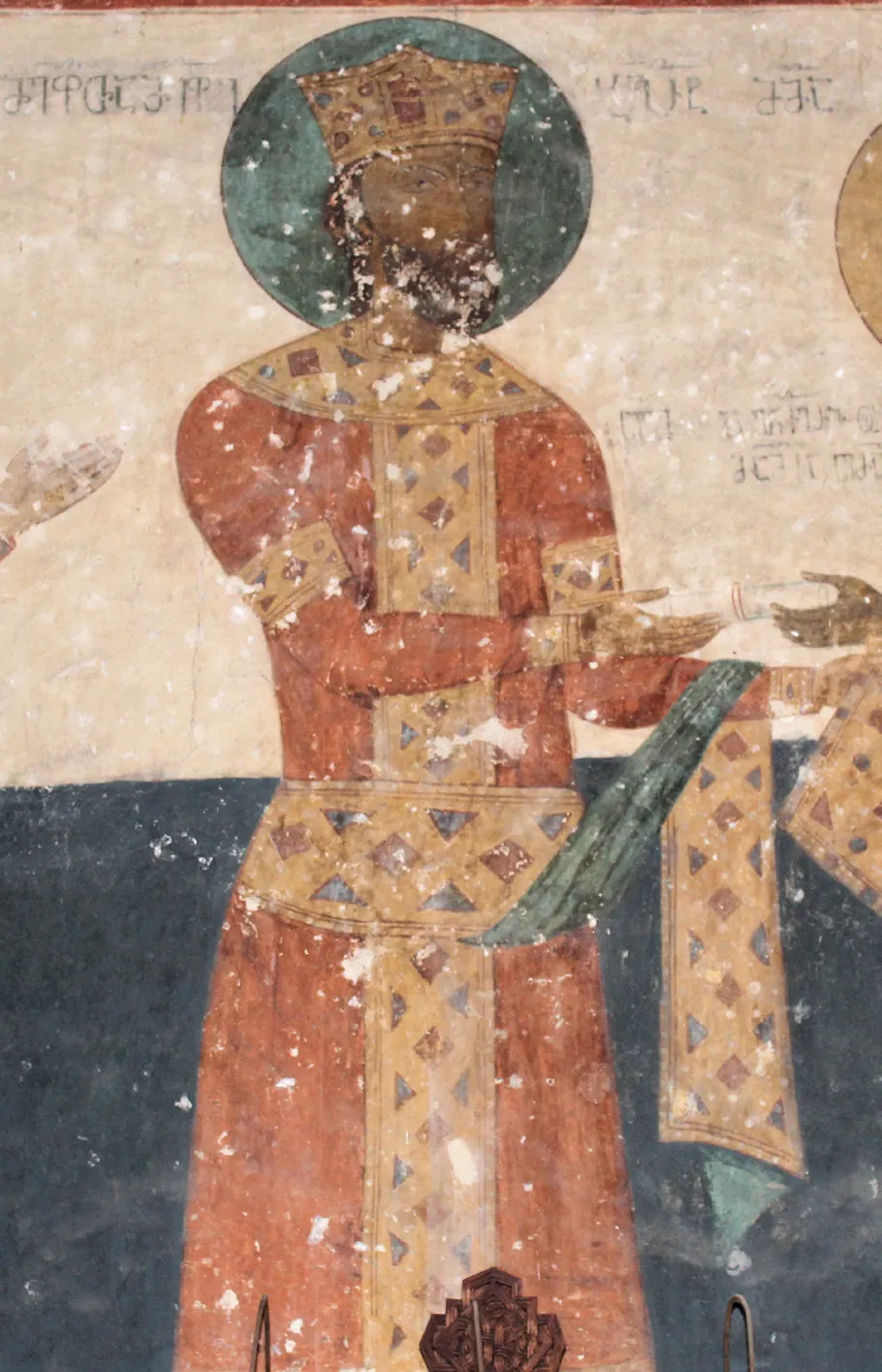
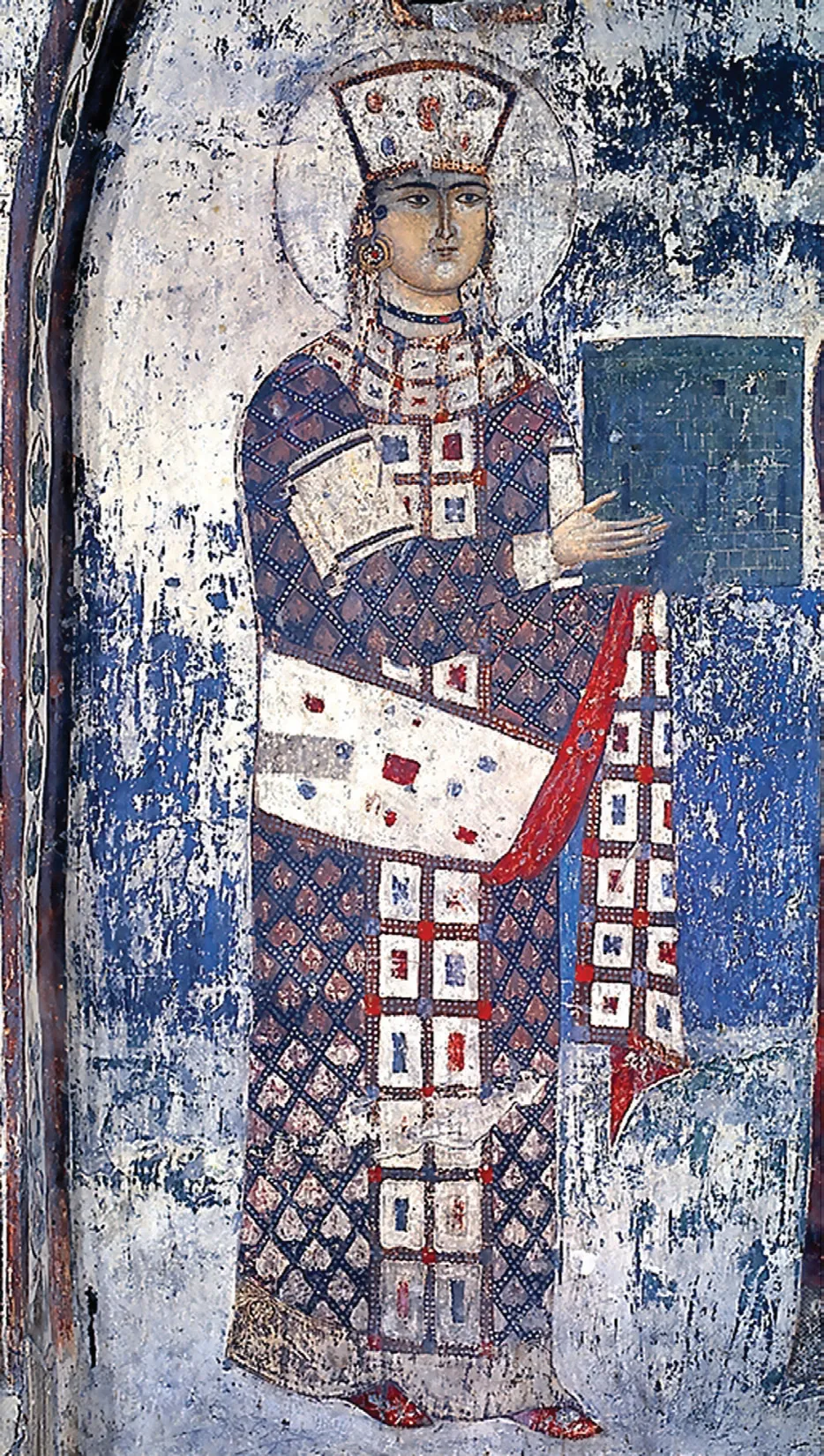
At the beginning of the 11th century, the power of the Bagrationi dynasty reaches its peak. Raised by David III the Kuropalates, Bagrat III became the king of the Georgians in 1008, thus laying the foundation for a unified Georgian state. Under the leadership of the Bagrationi, the country achieved a strong political structure, which was further developed by David the Builder and Queen Tamar. Their reign is known as the “Golden Age” of Georgia.
In the 11th-18th centuries, the Bagrationi remained the legitimate rulers of Georgia. Despite pressure from the Ottomans, Persians, and Mongols, they repeatedly managed to restore statehood. In the 14th-15th centuries, the dynasty again struggled to preserve national unity, and from the 15th century onward, the kingdom split into three branches: the Bagrationi of Kartli, Kakheti, and Imereti. Each branch tried to maintain independence in local conditions and expand the country’s national and spiritual tradition.
In the 18th century, due to political turmoil, many members of the Bagrationi dynasty sought refuge in Russia. The Georgian colonies they created there played an important role in preserving Georgian culture. The Treaty of Georgievsk of 1783 placed Georgia under Russian protection, but its terms were soon violated. In 1801, the Kingdom of Kartli-Kakheti was abolished, and in 1810 the Kingdom of Imereti, marking the end of the Bagrationi dynasty’s millennia-old royal rule. Members of the dynasty are still known in Russia for their military, ecclesiastical, and cultural activities. In Georgia today, the direct descendants of the dynasty are represented by the Bagrationi-Gruzinski branch.
The exceptional Christian piety of the Bagrationi rulers is reflected in the canonization of several members of the dynasty. Among them are Ashot I the Great Kuropalates, David the Builder, Queen Tamar, Demetrius I, Demetrius II the Devoted, Queen Ketevan the Martyr, and others. Many representatives of the Bagrationi family also occupied the patriarchal throne of the Georgian Apostolic Church, including David II, Melchizedek II, Nikoloz V, Domenti III, and others. Members of the dynasty often took monastic vows and dedicated their lives to the service of the Church.
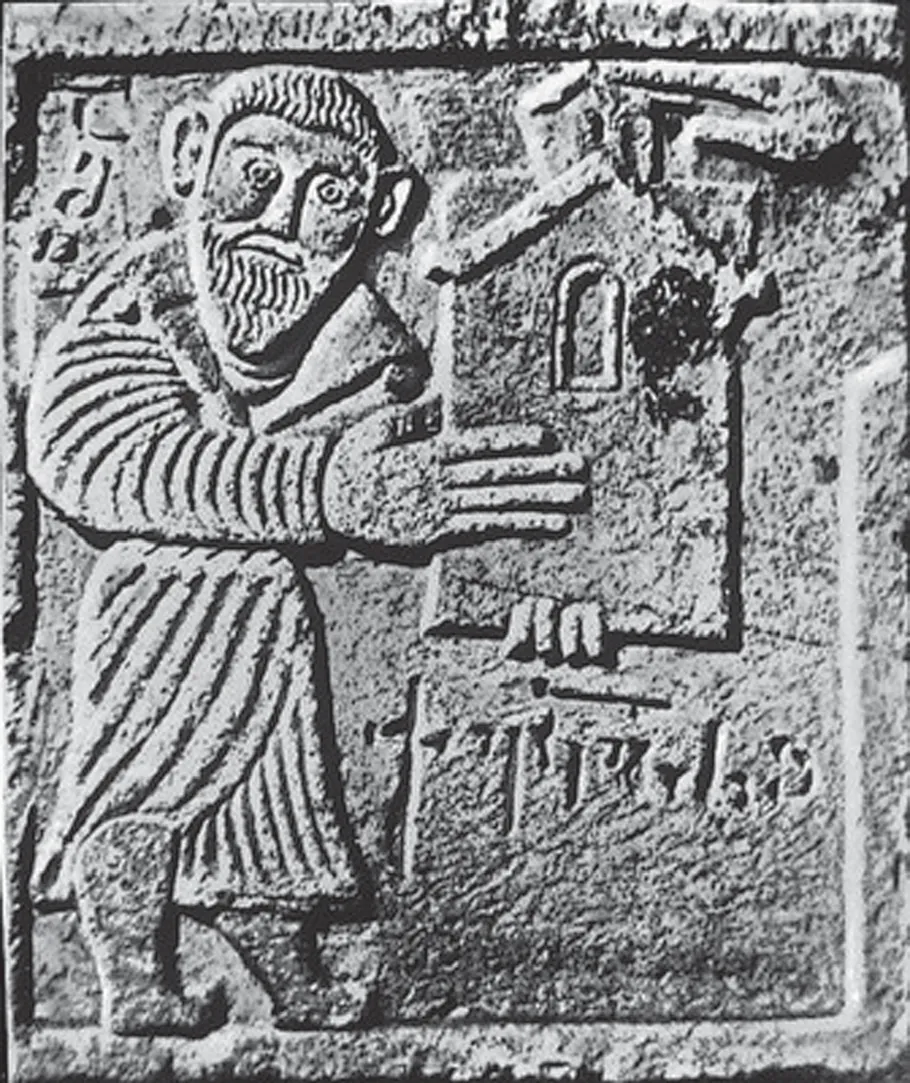
An important part of the Bagrationi dynasty’s cultural legacy lies in the churches and monasteries they built. The churches built by Ashot I, Bagrat I Kuropalates, David III Kuropalates, Bagrat III, David the Builder, Giorgi III, Queen
Tamar and other monarchs are still symbols of glorious Georgia today. Among them are the Bagrati Cathedral, Svetitskhoveli, Gelati, Vardzia, Gremi, and many others.
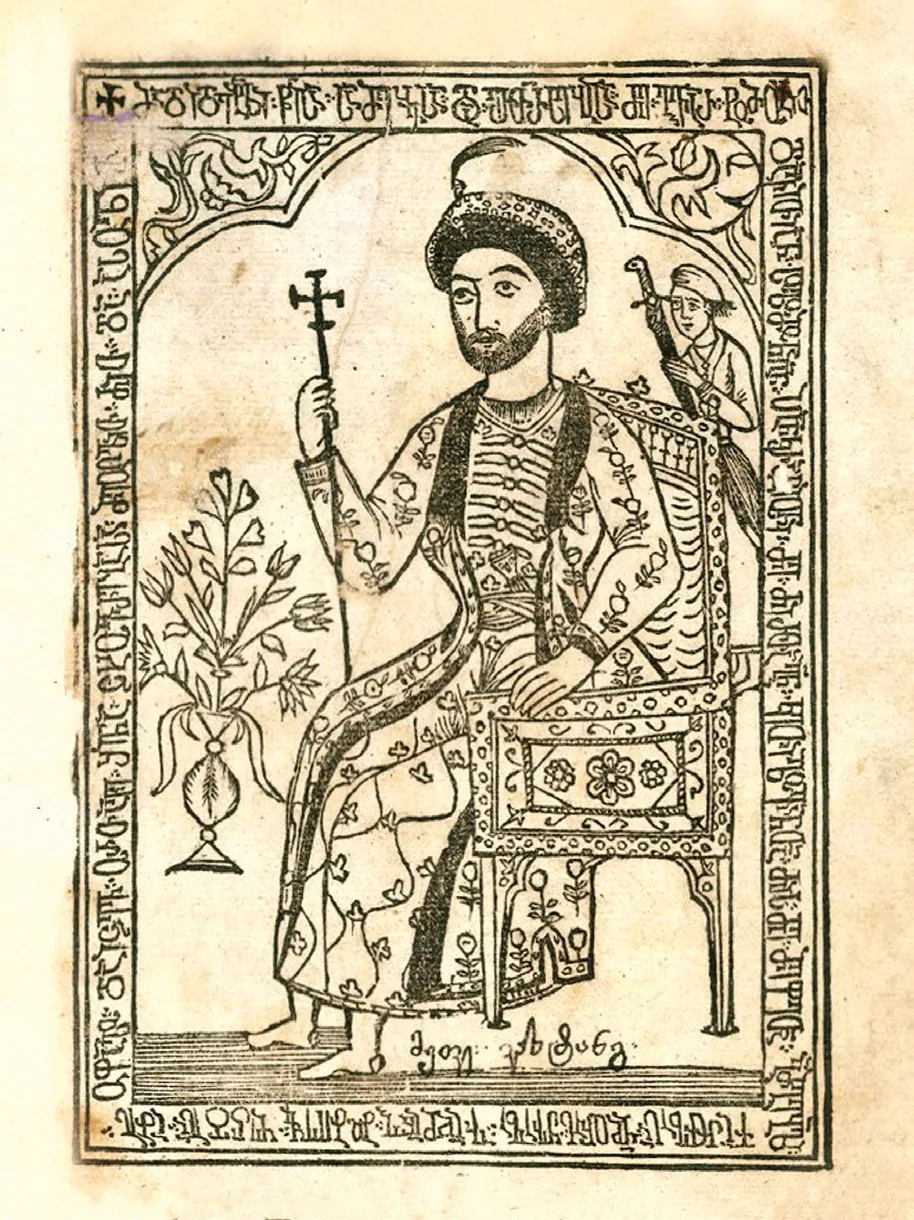
The Bagrationi also placed great importance on education. David the Builder founded the Gelati and Ikalto academies, while Vakhtang VI established a Georgian printing house, where he published ecclesiastical texts and supported the spread of knowledge. It is noteworthy that it was in this printing house that “The Knight in the Panther’s Skin” was first printed. It was also there that the first scientific research of the poem’s manuscript texts was conducted, which laid the foundation for the creation of “Rustvelology” as an academic discipline.
Despite repeated invasions and political instability, Georgia maintained its independence for centuries. One of the key pillars of this resilience was the Bagrationi dynasty, which preserved national identity, the idea of statehood, cultural continuity, and the Christian tradition. Their story is not only the chronicle of a royal family, but also an integral part of the Georgian idea of a state, one that continues to shape the nation’s cultural and spiritual life to this day.