Georgian Hospitality and the Culture of Neighborhood
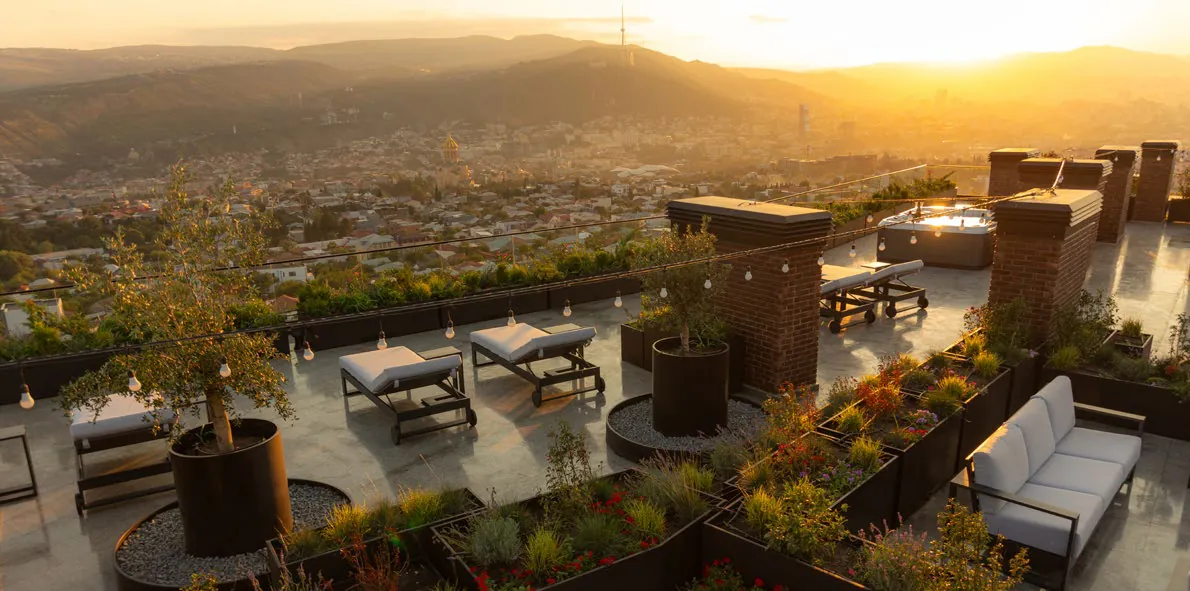
As the plane begins its descent and the majestic peaks of the Caucasus come into view through the clouds, along with green valleys and the orange rooftops of Tbilisi, passengers often wonder what awaits them when they land. They expect ancient fortresses, centuries-old cities, wine, and exceptional food. Yet for those arriving in Georgia, the most meaningful discovery often lies beyond its museums and architectural landmarks. Here, we call it a particular blend of human warmth and sincerity: hospitality.
Georgia has one golden rule that has been passed down for centuries: “A guest is from God.” This is more than a beautiful phrase – it expresses one of the most recognizable values in Georgian culture. For centuries, particularly in the mountainous regions, offering shelter to a traveler and ensuring a guest’s safety were considered matters of human solidarity and dignity. A stranger who arrived at a family’s door was not regarded simply as an uninvited guest – it was the host’s duty to offer care and shelter.
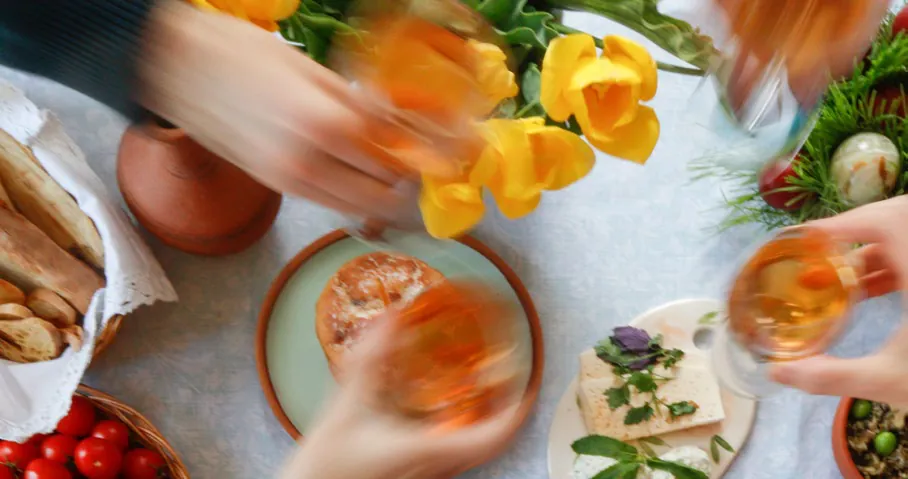
This attitude remains one of the foundations of Georgian hospitality today. The Georgian supra, or traditional feast, is perhaps its most visible expression, a place where people open their hearts to one another through the tamada’s (toastmaster) toasts, polyphonic singing, and wine. Yet beyond the supra, what matters most is the human gesture that tells a guest: there is a place for you here.
Georgian hospitality is not simply about an abundant table. It is about showing care: offering a guest the best seat, giving directions, lending a hand, sharing food, or offering one more glass even when the guest has already had enough. It is in these everyday gestures that the true nature of hospitality reveals itself – the desire to make even a stranger feel, if only for a while, at home.
The Georgian supra is one of the clearest expressions of this culture. Here, food is never simply food. The table brings people together, giving rise to conversations, memories, and stories. The tamada’s toasts, wine, polyphonic singing, and the custom of giving one another the floor transform the supra from an ordinary dinner into an almost ritual space. In the end, the most important part of a Georgian supra may be neither khachapuri, nor a meat dish, nor even the wine – it is the human connection created around the table.
But if the supra is the best-known expression of Georgian hospitality, its quieter, everyday form can be found in the culture of neighborhood.
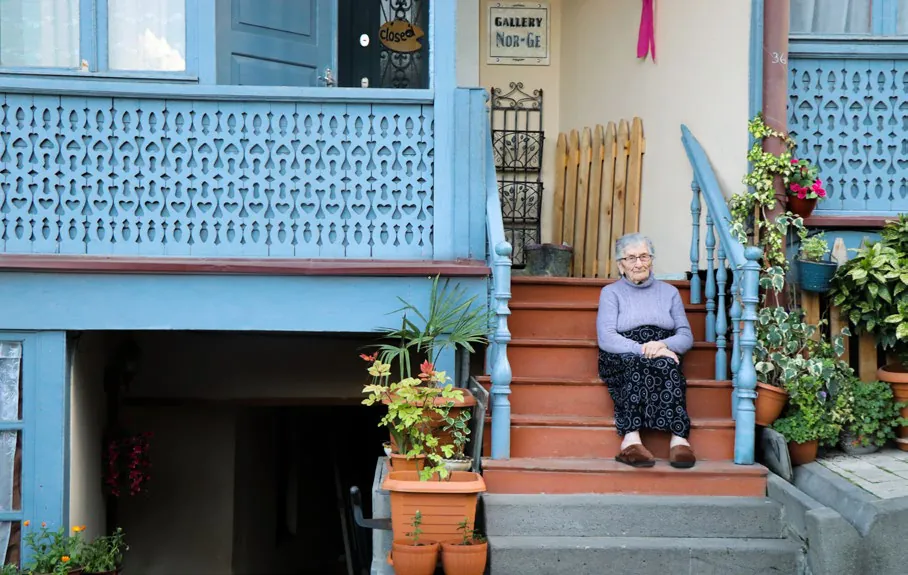
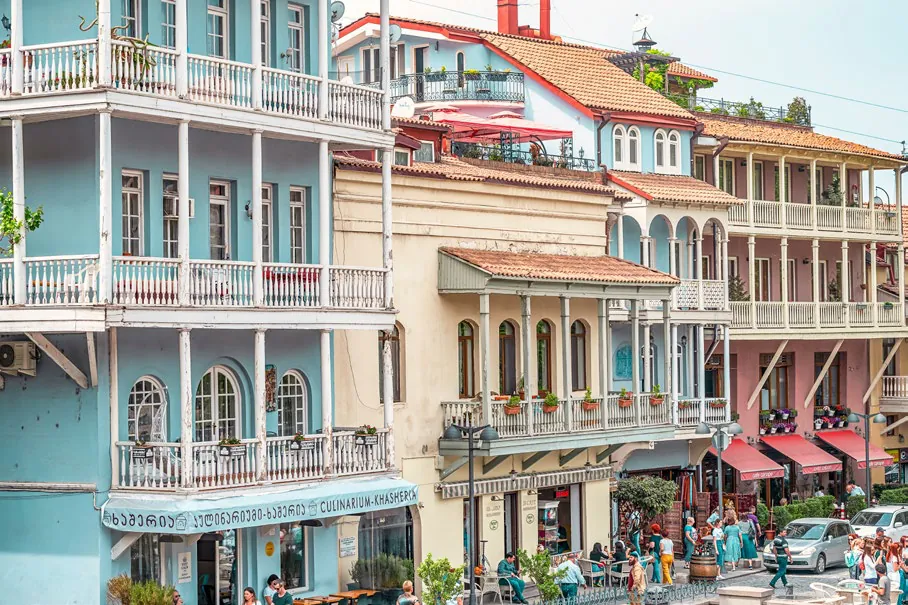
One of its most interesting examples can be found in the so-called “Italian courtyards” of Old Tbilisi. They are more than an architectural type. Over the years, these courtyards also became distinctive spaces of human connection. Wooden balconies, houses built close together, shared spaces, and doors opening onto the courtyard created an environment in which people’s lives did not simply exist side by side, but they crossed paths every day.
Here, a neighbor was often much more than the person living on the other side of the door. It was someone you could ask for salt, share a morning coffee with, tell about your day in the evening, and know you could turn to when you needed help. Trust sometimes ran so deep that parents who had to go to work and had no one to look after their child would leave the child in a neighbor’s care. Over the years, relationships like these created a particular closeness – little by little, a neighbor became part of a family’s everyday life and, at times, almost a member of the family.
Neighborly life in Georgia is not limited to the story of the old urban courtyards. In villages, it takes an even more direct form. People know one another’s daily lives well: they know who needs help bringing in the harvest, who has guests visiting, which family is celebrating, and who is going through difficult days. Working together, sharing food and produce, inviting a neighbor to a celebration, or simply stopping to say hello along the way – all of this forms part of a broader social culture.
Georgian hospitality and neighborly life, then, are not so far apart. Both are rooted in one simple idea: making room for another person in your world.
What is also interesting is how this tradition is taking on entirely new forms today. In modern Tbilisi, many of the old shared courtyards have changed, the rhythm of the city has accelerated, and people often live more in- dependently from one another. Yet the instinct to open the door to a guest, check in on a neighbor, share a home-cooked dish, or stand by someone in difficult times has not disappeared. The tradition may change its form, but its essence, human closeness, remains very much alive.
Perhaps that is why visitors to Georgia so often remember not only what they saw, but also the people they met. Years later, they may no longer remember the name of a particular street or restaurant, but they may clearly remember the host who added one more dish to the table, the neighbor who showed them the way, or the stranger who shared the story of their city in the course of a conversation.
In Georgia, a guest is more than a tourist. For a while, they become part of a particular home, courtyard, table, and story.
And so, dear passengers, when the wheels of the plane touch the runway and your journey begins, do not look only for the best-known places. Wander through the courtyards of Old Tbilisi, notice the balconies, listen to the sounds of the street, talk to the locals, and if someone sincerely asks, “Shall we have a coffee?” – do not be too quick to say no.
It may be in precisely such a small moment that you discover the Georgia no guidebook can ever fully describe. A country where hospitality is not simply about welcoming a guest, but about making room for another person in your world.