Ribirabo – Saving Mosaics
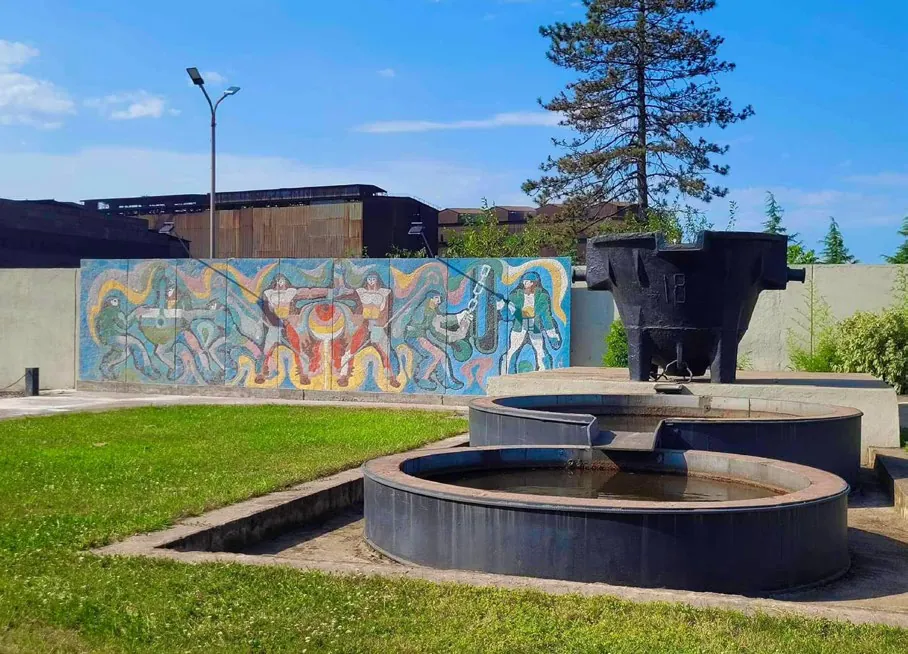
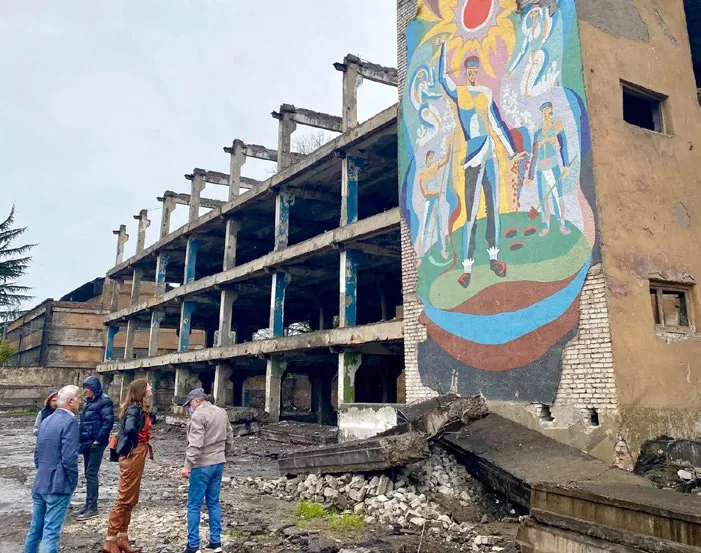
Sometimes we walk past works of art in city streets without really noticing them. Large compositions made from small pieces of colorful ceramic or glass have been part of walls, building facades, and public spaces for decades. Today, some have become part of history, some have been damaged, some have disappeared, and others survive only in photographs.
Georgia and Ukraine are among the countries where an important legacy of 20th-century monumental mosaics still survives. In Georgia, these works are particularly interesting because they do not simply reflect the ideology of a particular era. They often show Georgian nature, culture, and the everyday life of ordinary people.
Mosaics were created from different materials, including smalti and ceramics, and making them required great skill. Today, each surviving work can also be seen as a historical document in its own right.
The Ribirabo Foundation was created to study, document, and preserve this heritage. It was founded in 2019 by Natalia de Pita Amirejibi, together with two friends, Irina Kocak and Lusine Bardon.
Natalia studied contemporary art at the Sorbonne and later learned the art of mosaic in a Venetian workshop. After returning to Georgia, she became interested in discovering and studying works that seemed to go almost unnoticed against the backdrop of everyday life.
This is at the heart of Ribirabo’s work: a mosaic should not be seen simply as decoration belonging to the building on which it appears. If a building changes, it does not mean that the work of art should disappear with it.
The foundation’s projects show that reconstruction and the preservation of historic mosaics do not have to be at odds with each other. Saving them may require a great deal of work, patience, and specialist knowledge, but the result can preserve a work for decades to come.
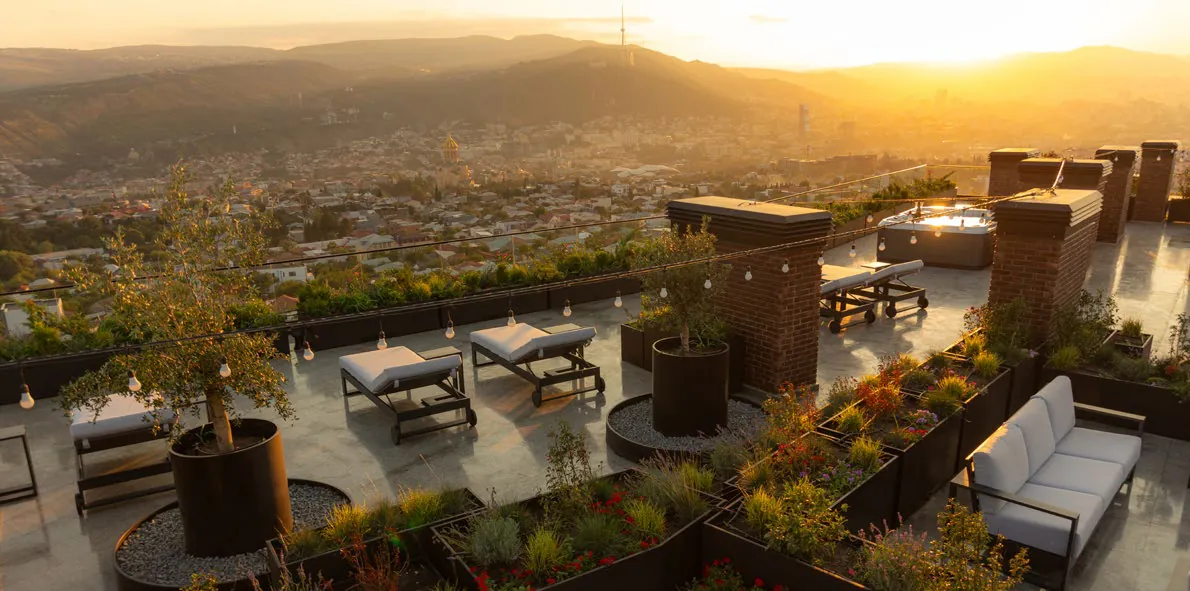
One such story involves the mosaic at the Buknari Hotel. For the Ribirabo team, it was especially important that a private company wanted to preserve and give new life to the old mosaic.
As Natalia de Pita Amirejibi recalls, it was the first time they had encountered a private company taking the initiative to save an old mosaic.
The work itself proved particularly difficult. The mosaic was taken apart, detailed drawings were prepared in advance, and each fragment was then carefully reassembled. It was a far more demanding process than it might seem, almost like rebuilding a giant, colorful puzzle without losing a single important detail.
It is at moments like this that we realize that saving a mosaic is about much more than repairing an old wall. Behind every small piece lies an artist’s idea, a particular period in history, and many hours of human work.
Another important Ribirabo project took place in Samegrelo. Three monumental works – The Lady in the Red Dress, Summer, and Musicians – were located on unsafe walls, leaving their future uncertain.
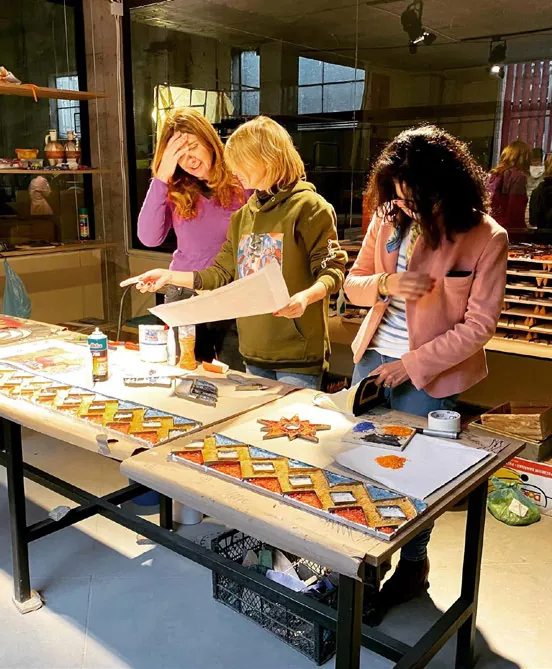
A restoration team, working with Georgian and French specialists, saved the works and moved them to the Mosaica Studio workshop in Zugdidi. Young volunteers from conflict-affected regions also took part in the project.
Here, saving the mosaics took on another meaning. Alongside preserving the historic works themselves, a new generation became directly involved in the process and gained hands-on experience in cultural heritage conservation.
Ribirabo’s projects can be found in different parts of Georgia. The mosaic at the former bus stop in Tsikhisdziri, Dusheti Municipality, for example, has a particularly interesting historical character. Created from sketches by Zurab Kapanadze, the composition features lines from “The Knight in the Panther’s Skin”. Its restoration also involved a technique patented by Georgian masters in 1977, combining monumental art techniques with the principles of Georgian cloisonne enamel.
In Zestafoni, Ribirabo’s work has also included mosaics by Demur Basheleishvili. Along with restoring mosaics in the city, the foundation saved Mzechabuki, which had survived on the grounds of the former ferroalloy plant, from destruction. The restored work was later installed in the hall of a cultural center built in Khoni for people displaced from Abkhazia.
Another, quite different story is connected to the Rustavi International Motorpark. Using surviving fragments of the damaged “Racing Drivers” mosaic, the foundation created two panels depicting go-karts and racing motorcycles.
Ribirabo’s work is not limited to restoring mosaics. The foundation also considers it important to identify and document works that still exist but may be largely unknown to the wider public.
The foundation is currently working on an online catalog of mosaics created in Georgia during the 1960s–1980s. Its aim is to bring together surviving works from different regions of the country, document them, and introduce them to the public.
Such a catalog is more than just a website. It is a constantly growing archive, a living record to which discoveries and new stories can be added over time.
And perhaps this is where Ribirabo’s work becomes most meaningful. Saving a mosaic is not simply about preserving colors and pieces of ceramic and glass. It is about preserving the memory of a time, its people, its artists, and its cities.
A single mosaic may be made up of thousands of tiny pieces. On its own, each one may mean very little, but together they create the complete picture.
Cultural heritage works in much the same way. A seemingly forgotten wall, a small fragment, an old bus stop, or a colorful composition left on a hotel facade can ultimately become part of a much larger story – one that we preserve today so that others can still see it tomorrow.