Three Critical Speeds During Takeoff
V1, Vr, V2
VR (ROTATE)
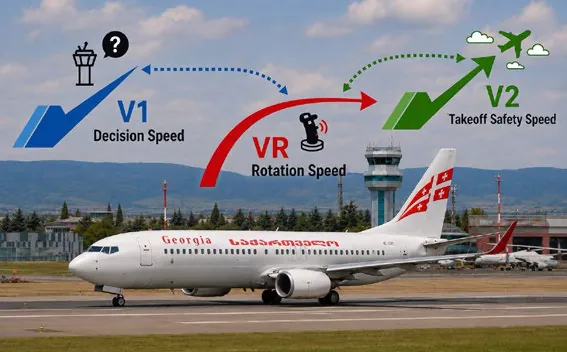
While passengers simply feel the aircraft accelerating during takeoff, for the flight crew, this is one of the most critical phases of the flight. During this stage, pilots closely monitor three key speeds: V1, VR, and V2.
V1 – DECISION SPEED
This is the final point at which the takeoff can still be aborted if necessary. Once V1 has been passed, barring exceptional circumstances, standard procedure is to continue the takeoff.
VR – ROTATION SPEED
This is the speed at which the pilot begins to raise the aircraft’s nose. This action, known as rotation, initiates the aircraft’s lift-off from the runway.
V2 – TAKEOFF SAFETY SPEED
After lift-off, the crew maintains V2, the speed required to ensure the aircraft can continue the takeoff and climb safely.
It is worth noting that V1, VR, and V2 are not the same for every flight. These speeds are calculated in advance and depend on several factors, including the aircraft’s weight, runway length, outside temperature, wind conditions, and other operational data.
This is why a safe takeoff begins not on the runway, but with precise planning and careful calculations.