Iliko Sukhishvili History of Georgian Dance
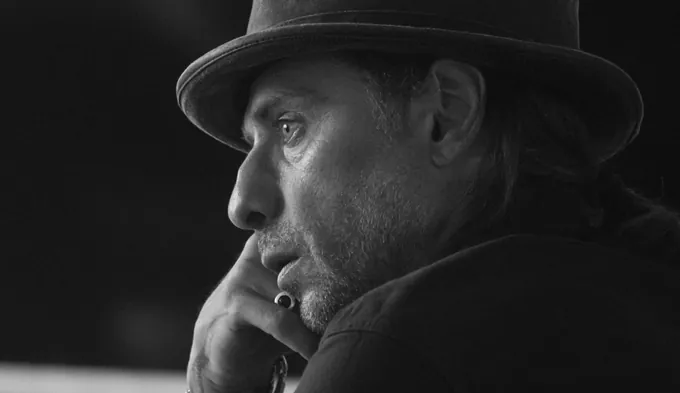
Like many ancient peoples, Georgians used dance to connect with powerful cosmic energy, which was necessary to overcome difficult stages in their lives. They danced not only to expend energy but also to gain it, to win the favor of God, to attract success to the country, and to win the fight against evil.
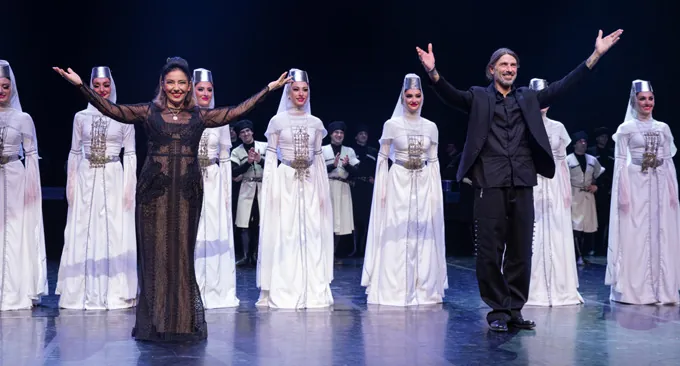
The 79-year history of the Sukhishvili Ensemble encapsulates numerous stories, victories, memories, and feelings of unity, pride, as well as shared emotions, all presented to the audience. This historical heritage, now carried on by the third generation of the Sukhishvili family under the leadership of Iliko and Nino Sukhishvili, persists into the new century, facing new challenges and embracing new perspectives. Behind every choreographed dance, intricate trick, and melodious piece of music lie countless thoughts, outlines, sketches, and emotions that come alive before the eyes of the audience, immersing them and making them an integral part of the spectacle.
In the 1930s and 1940s, it was challenging to predict the future of Georgian dance, as the art form had largely been forgotten in Georgia during that time. It’s difficult not to feel joy and pride for “Sukhishvili,” which has persevered to this day thanks to the efforts of Iliko and Nino.
Art is a living, constantly evolving organism. Recall the significant moments you’ve highlighted in the history of the Sukhishvili family.
The history of the Sukhishvili begins with the creation of the choreographic ensemble. Nino Ramishvili and Iliko Sukhishvili crossed paths in the opera theater. Nino, a classical ballet dancer, and Iliko, known for his character roles in opera performances staged by Zakaria Paliashvili, from my point of view, combined a synthesis of classics and folklore. Classical ballet demands adherence to rules and precision, whereas folklore thrives on improvisation, highlighting inner states, moods, emotions, and the character of diverse cultures. This fusion formed the foundation and inspiration for their idea.
A pivotal stage in the ensemble’s journey was the integration of scenography and painting into their programs. Soliko Virsaladze introduced vibrant colors. Each innova- tion was met with contradictions, a theme that persisted throughout the ensemble. Critics questioned whether the performances were authentically Georgian or national, though art defies strict boundaries. Georgian folk dance and music embraced as a genre then and now, encompass colors, scenography, costumes, and all participating elements, allowing for complete artistic freedom.
An important turning point occurred in the 1960s with the ensemble’s performance at La Scala. By showcasing Georgian folk dance at this prestigious venue, traditionally reserved for classical music, opera, and ballet, the ensemble gained recognition and elevated folk dance to the same status as the classical genre. This event signified a significant appreciation and acknowledgment of Georgian folklore internationally.
Where did your desire to continue the work started by your grandfather, Iliko Sukhishvili, come from?
My sister and I started everything with dancing. I had been on stage since I was 12 years old. Initially, I performed solo parts, but later I became an ordinary dancer who did not stand out much from others. Dance has been a central part of my surroundings since childhood. Like all children, I thought that everyone lived in the same environment as me. Therefore, I could not perceive all of this as a responsibility. I realized very late that all of this was my work and profession because it was naturally ingrained in me. I think it’s good that I didn’t feel the depth of responsibility from the beginning.
Later, I began a professional relationship with people who were my teachers. I was very young then, and they were older than me. Initially, when I had to explain the setup to them, I felt very embarrassed, but everyone stood by me and helped me. Respect and support passed from generation to generation in such a way that I did not feel the weight and burden of responsibility, which has helped me a lot from today’s point of view.
As time passes, I observe more and take a more serious look at situations and events. If earlier I used to take bold steps and decisions, now I am more cautious. We raised ourselves, according to the performance of the ensemble; we want to improve our results. This has made me more serious and willing to look for different approaches.
When you started the job, what were your aspirations and what goals did you have in mind?
What I want to see, what my desire is, this is my main motivation. I believe that if a person starts focusing on what will be liked by the public, the audience, or what will be effective, then the focus shifts outward, and you may lose touch with your inner voice, which is not ideal. The key is to be able to identify your desire, and then during the process of work, you will discover whether it will be successful or not.
I collaborate closely with the group, and their reactions guide me. Their comfort level in the new production indicates whether we’re on the right track or not. It’s at this moment that a mystical connection occurs between us, which is inexplicable. Everyone senses which parts will be applauded, and what will resonate with the audience. Initially, you just need to discern what you desire and follow that path.
Some aspects felt excessive to me, things I felt were unnecessary. Trends evolve. In the 1930s, 1960s, 1990s, completely different elements were in demand. Today, in a new century, there are different needs that one must perceive and respond to.
Indeed, dance has undergone significant changes. Previously, performances often featured introductions saturated with acting skills, portraying scenarios like a girl searching for a boy, which captivated audiences and were typically performed by famous soloists. There were performances where dancers pretended to drink from horns, although it was only a theatrical gesture. I chose to eliminate such elements.
I desire to create an atmosphere and transform the performance into an impactful spectacle that evokes emotions, charges the atmosphere, and embodies the character, allowing the audience to truly feel the essence of the performance.
What is the enduring tradition of Sukhishvilebi?
Our main tradition is to teach everyone the authentic Georgian dance alphabet. Once they acquire the fundamental knowledge, we guide them from that same foundation into modernity. ‘You are a good person, and I will teach you to dance’ was the motto of my grandfather and grandmother. Back then, there were no schools, and I often heard stories of grandparents spotting girls and boys on the street whom they then brought to dance lessons. Anyone can learn to dance; the key is to be a good person. When the ensemble goes on tour, the purity and authenticity of a person are especially important and visible. Dance is not just about the stage and theater; it’s about living together, creating and sharing memories, where we feel a sense of belonging. It’s about people coming together, traveling, and introducing Georgian dance to different countries and audiences. The audience’s reactions are varied and intriguing. Some clap at the beginning, while others remain silent and explode with applause at the end. These reactions express people’s characters, idiosyncrasies, and a range of emotions, providing the artist with valuable insights and experiences.
Has the desire for a child to learn Georgian dance shifted away from being primarily driven by parents, as it was in the past?
Nowadays, I sense that the desire and interest in learning Georgian dance also come from the children themselves, and I often inquire about this from the children. Speaking from my personal experience, I wasn’t fond of attending the children’s studio. Despite being the grandson of Iliko Sukhishvili, the teachers gave me special attention based on the Georgian approach. While other children were actively dancing and taking notes, I found it difficult to cope with the situation, approach, and attitude; it all felt incomprehensible and uncomfortable to me. Consequently, I asked my grandfather to teach me to dance in the ensemble. I spent all my time there, touring, and immersing myself in the stage environment before I even started dancing, and I was completely captivated by it all. Therefore, it never felt like a job to me; initially, it was child’s play, then it became enjoyable, and finally, it became a way of life through travel and performance. In the 1980s, the country was closed off, and traveling abroad was impossible. During such times, I witnessed many things that made me feel like I had returned from space. When my family went on tour and left me behind, I felt very happy; I had fun, played football, and engaged in various activities. I remember all of this vividly.
Nowadays, when children are brought to the studio, it’s crucial to listen to the child’s desires and engage in conversation with them. From my own experience, I’ve learned that the child’s mood and attitude are of paramount importance. For a child, attending dance classes should not feel depressing or forced.
Do you watch the dance from the audience as a spectator, and what emotions does this experience evoke for you?
I watch the dance from backstage because I don’t feel comfortable in the hall. My father, Tengiz, used to watch the dance from the hall. On the other hand, my grandmother was always behind the scenes; for her, being backstage meant being close to the stage, as if something would go wrong if she were far from there. When you’re behind the scenes, you’re in constant motion. Everything can change in 1 second. The main story unfolds backstage, behind the curtain. Our concert always features live music, as it allows us to manage the live process according to the development of the situation.
What changes have occurred in dance style and choreography?
Georgian dance possesses significant potential. As a spectator, I realized that Georgian dance could be softened, slowed down, broken down into moments, and stretched. My vision led me in this direction. I wanted the choreographic element to blend seamlessly with the trick, rather than existing separately from each other. One mistake I observed was when there was no synchronization between the kneeling and the trick, which affected the overall effect differently. I advocate for Georgian dance to have repetitive elements so that even non-professionals can easily replicate it. The key is to move in a Georgian manner, following the rhythm and expressing what one feels. We are working towards this goal and striving for more freedom in Georgian movements.
What is the process like, and what does it entail for a choreographer to work on a dance when they are not present in the rehearsal hall?
Working on a dance remotely is primarily a thought process. If you have a clear vision of what you want and how you want it to be executed, you can begin to translate that vision into practice. You ponder over the details, such as the number of dancers, and the rhythm, and you might jot down notes or even create sketches. It’s an enjoyable process, and I find great satisfaction in it. When I mark something down, it feels like progress, even though it’s rare that the final result in the rehearsal hall matches exactly what I envisioned. There’s always something unexpected happening on the ground, and everything tends to evolve and change.
How much does being involved in multiple processes, such as dance and music, help you convey more to the audience?
Music holds a divine significance for me. No other art form possesses the same influence as music. I find music essential for dancing. While the dance script may be in place, the music doesn’t necessarily have to be finalized; however, it has the power to provide direction and structure for the dance. Even in moments of emptiness and silence, one can build something simply by counting, but without melody, mood, and character, everything remains unclear, akin to physical exercise to a rhythm. I never aspired to create music. We function more like a gypsy orchestra; we haven’t received formal training from a conservatory. Instead, we rely on our sense of hearing. We don’t write notes; rather, we sing to each other, listen to each other, and gradually piece together a complete composition alongside the dance. From seemingly nothing, a tangible, palpable, and audible wealth emerges, and then the magic begins. Everyone realizes they are enjoying themselves, and individuals start to express themselves within the process, which I wholeheartedly welcome. I’m never rigid or categorical because it’s crucial for the musicians to feel comfortable. When a musician feels at ease, they inhabit the music differently, experiencing it uniquely. I particularly appreciate certain musical themes that arise. Currently, I’m eagerly anticipating the main piece of music, which I believe will arrive at the perfect moment.
They often say, ‘Where Sukhishvili is, there is a holiday.’ What is it about Georgian dance that creates this festive atmosphere?
This feeling is particularly palpable when we embark on tours. For Georgian immigrants and the host countries, our cultural performances often serve as a bridge, connecting people with the rich heritage of our homeland. Many times, the opportunities and culture of Georgia are not fully understood by the host country and its people. However, by the end of our concert, there was a palpable sense of victory, dignity, and pride among both the performers and the audience. Foreign guests who accompany Georgians to our concerts often experience a transformative shift in their perception, mood, and impression of Georgians and our culture. I’ve received numerous stories that highlight how our performances have sparked promotion, positive news, and progress for Georgian immigrants in their adopted countries.
What does dance bring to a person’s life?
First and foremost, dance instills a sense of vitality, activity, serenity, harmlessness, and love within a person. It triggers an emotional explosion, eliciting genuine feelings and expressions. I often emphasize the importance of not overthinking while dancing—instead, I encourage individuals to disconnect from their thoughts, focusing on internal sensations rather than outward appearance. As long as one remains authentic to themselves, their performance will captivate the audience. When a dancer dances with this inner state, they embody perfection, conveying the most genuine emotions to the audience.
What is your vision for the ensemble’s future?
When musicians and dancers come together, we share a common language, and from this unity, ideas and visions are born. We thoroughly enjoy the creative process; it’s as essential to us as air. When I first embarked on this journey, envisioning our current achievements would have been challenging. We don’t adhere to a rigid plan; instead, we focus on the dynamic process and our collective desires. We take pride in popularizing dance, igniting children’s interest in learning Georgian dance, and sharing a part of Georgian art with the world.