Niko Pirosmani Tragic Life and Great Recognition
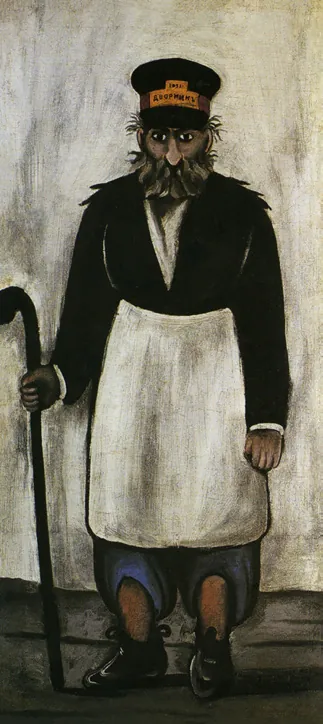
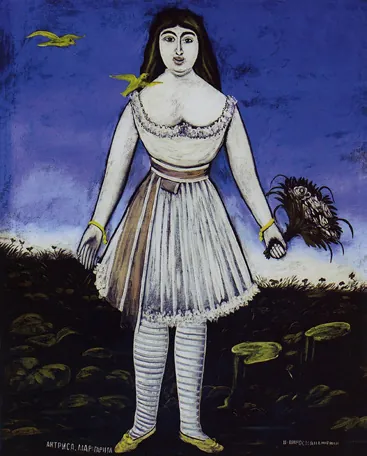
“Fisherman in a Red Shirt,” “Actress Margarita,” “Gate Keeper,” and “Georgian Woman with Tambourine” are just a few examples of famous paintings that are considered unique works not only in Georgian art but also in the world art field.
Their author is Niko Pirosmani, whose full name is Niko Pirosmanashvili. The artist’s creativity is diverse – he liked to paint table scenes and rural nature. He rarely painted city landscapes; however, he often depicted the residents of Tbilisi, such as owners of dukans (small trading and workshop houses, sometimes dining houses or taverns in Tbilisi and other cities from the 17th century), kintos (traders or unemployed people mostly occupied in entertaining others in Georgian dukans), and dancers. Images of animals occupy a large place in Niko Pirosmani’s works. He was also interested in historical subjects and figures. Pirosmani’s pictures are also inspired by Georgian art of previous centuries.
One of the famous works of Niko Pirosmani is “Gate Keeper.” According to storytellers, Nikala, as his close acquaintances called him in Tbilisi, painted the wellknown, bearded, and kind Kurdish gate keeper. It is said that this person took great care of the artist, and when Nikala broke up with Margarita, this kind gate keeper sheltered him in his small dwelling.
“Actress Margarita” plays an important role in Niko Pirosmani’s work. The French woman depicted in the painting existed in the artist’s life. Their love story is known to many. It is said that they met in 1905 at a concert held in Mushtaidi Garden in Tbilisi. According to the story, Niko was immediately fascinated by the French actress, and they even had a relationship for a year. However, Margarita could not stay long with a simple and poor artist; she left him and returned to France. Niko loved Margarita so much that he sold all his possessions and sent thousands of roses to his sweetheart. No one knows if this story is true or not.
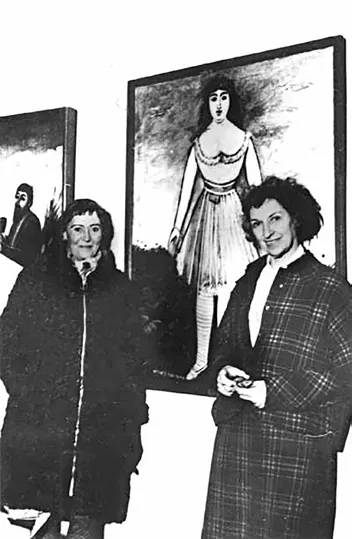
However, one thing is clear: in 1969, when Pirosmani’s exhibition was opened in the Louvre in Paris, an old lady stopped by the portrait of Actress Margarita. She was a French dancer, Marguerite de Sèvres, who really had come to Georgia on tour.
Until then, while Pirosmani was struggling with pain, it turns out that the gate keeper tried to help him in every way. Niko spent a lot of time in the apartment under the stairs and painted all day long. The gate keeper brought him food and tried to rekindle his interest in life. One day, the artist presented him with a picture. This was the famous “Gate Keeper” portrait.
As for the difficult life of Niko Pirosmani himself, he was a self-taught artist. His exact date of birth is unknown. He was probably born in 1862 or 1863 in the village of Mirzaani in the Kakheti region. He had two older sisters. Niko was 8 years old when he was orphaned and became a servant in a rich family in Tbilisi. Niko was treated well there; the little Pirosmani painted the walls of the house with his paintings. Later, Nikala had to leave this family.
In 1880, Pirosmani opened a painting workshop and painted signage for shops and dukans. After three years, Nikala was hired as a train conductor on the railway. He often painted during this period as well. Due to illness, he had to leave work temporarily; however, after recovery, he was not reinstated to the job.
Pirosmani’s daily life was associated with great hardship and poverty. He often used to find shelter with one owner of a dukan after another. He often paid for his living with his own paintings. Niko painted signage and pictures in exchange for bread and a glass of wine.
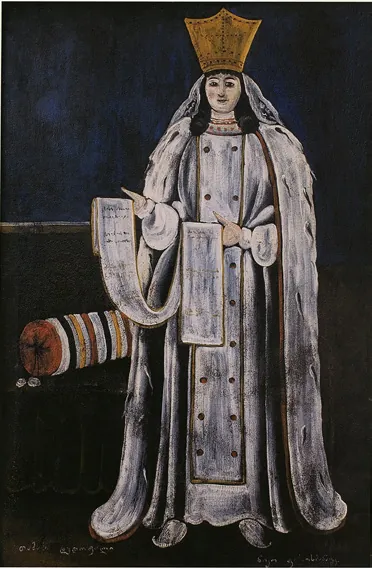
Despite his hardships, he must have been quite an intelligent and well-read person, as his works testify. He should have known both Georgian and world-historical facts well. He painted the portraits of “King Tamar” and “Shota Rustaveli” several times, as well as “St. George” and “Giorgi Saakadze.” He also painted scenes from the Japanese war.
Despite his poverty, he was quite a proud person, which is why he was nicknamed “the Count.”
Two years before Pirosmani’s death, in 1916, artist Lado Gudiashvili visited him at home. From his words, we learn that Nikala used to collect kerosene fuel as a drawing material. He had all his clothes blackened. Once, Lado Gudiashvili invited Pirosmani to a gathering of artists, but the proud Pirosmani refused, saying, “I cannot appear in public in these clothes; I consider myself the last man.” Their next meeting occurred when the Union of Artists decided to give Niko 200 “maneti” (the currency of the Democratic Republic of Georgia and the Georgian Soviet Socialist Republic between 1919 and 1923). Lado Gudiashvili searched for him everywhere. One day, he saw children throwing stones at the door of a room. The man who was being bullied by the children was Niko Pirosmani. Lado Gudiashvili knocked on the door, and Niko opened it.
He remembers: “Niko Pirosmani was tall, with gray hair slicked back. He wore a gray jacket and dirty, paintstained trousers. In short, before me stood a resident of the neighborhood, broken and depressed by alcohol. I took out the money and handed it over. Niko stopped and became petrified. He couldn’t find his voice. He didn’t know how to thank me.” Gudiashvili also recalls that the great artist had one wish – Pirosmani dreamed of owning a huge house where he could invite many people to talk about art and his life over a cup of tea.
The great artist Niko Pirosmani died in 1918 at the age of 56 in a dark, abandoned cellar. He did not have children or family, and his grave is unknown. Pirosmani only gained recognition after his death, and today his paintings are priceless to Georgians.
After Pirosmani’s death, the Polish brothers living in Georgia, Ilia and Kirill Zdanevich, made significant contributions to collecting the artist’s paintings, studying his work and biography, and popularizing his art. Additionally, the French artist Le Dantu, who visited Georgia, took some of Pirosmani’s paintings with him. Dimitri Shevardnadze also played a key role in collecting Pirosmani’s works. Georgian writer Giorgi Leonidze contributed by uncovering important information about the artist’s life.
In the 1970s, a monument to Pirosmani was erected in Tbilisi. Additionally, a museum dedicated to Pirosmani was opened in his native village, Mirzaani.
Niko Pirosmani’s exhibitions have been organized in many countries around the world. Currently, 146 works of the artist are preserved in the National Museum of Georgia, 16 canvases are housed in the Sighnaghi Museum, and 14 works are exhibited in the Niko Pirosmanashvili State Museum in Mirzaani.
In Tbilisi, the works of Niko Pirosmani can be seen at 11 Rustaveli Street – in the Dimitri Shevardnadze National Gallery, which is popularly known as the “Blue Gallery.” The museum’s collection includes
30,000 exhibits of modern Georgian culture, including examples of painting, graphics, decorative and applied art, and photography. The main collection consists of classical Georgian paintings and sculptures from the 20th century, including a rich collection of works by Niko Pirosmani.
The Blue Gallery is an important part of Tbilisi’s history. It was founded in 1920 under the name of the Art Gallery of Georgia. The initiator and first director of its creation was the artist Dimitri Shevardnadze. The first exhibition was held in the gallery in October of the same year. The exhibition policy of the gallery was also defined in its early years: it aimed to showcase Georgian and foreign, old and modern fine art pieces, encompassing all outstanding works that were created or came to the territory of Georgia.