Nino Ananiashvili and the History of Georgian Ballet
Ballet is a magical world where dance, music, movement, content, and story intertwine seamlessly. For many, watching ballet is akin to experiencing a fairy tale come to life – a journey into a magical realm where one never tires of exploring. The history of Georgian ballet encompasses many fascinating stages. Behind each performance lies a multitude of thoughts, outlines, sketches, and emotions that come alive before the eyes of the audience, drawing them into the spectacle. Behind all of this is the tireless work, motivation, and love of the ballet troupe’s leader, Nino Ananiashvili. Today, she presents the success story of Georgian ballet to the whole world.
How and at what age did you first encounter ballet?
My first encounter with ballet occurred when I was ten years old. I enrolled at the Tbilisi Choreographic School, where I studied for four years. Later, I continued my education at the Moscow Choreographic School.
Did you have clearly defined professional goals from the beginning, or did your career path unfold naturally over time?
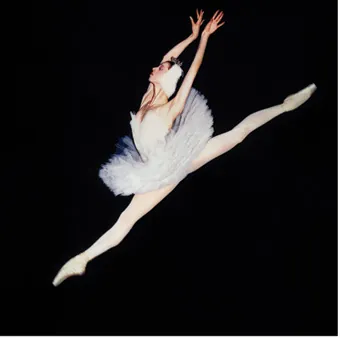
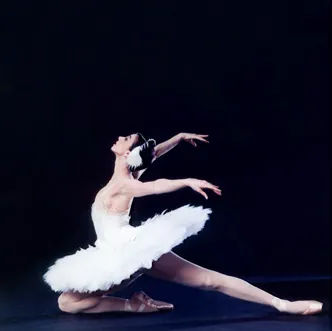
Initially, I had no intention of pursuing ballet professionally. I was an athlete – I competed in ice skating. I was a champion and had considerable success in that field. However, in the last year of my studies, at the age of nine, I was asked to perform the “Dying Swan” demonstration dance. My mother sewed a beautiful costume for me and made me a real feather headband, and from that moment, my teacher started encouraging me toward ballet. At the age of ten, I was admitted to the Tbilisi Choreographic School, where the artistic director was Vakhtang Chabukiani. Initially, I continued both ballet and ice skating for a year, as I was hesitant to leave skating. However, eventually, I chose ballet.
Tell us about the roles that you specifically distinguish and in which you feel you were able to showcase your personal qualities the best.
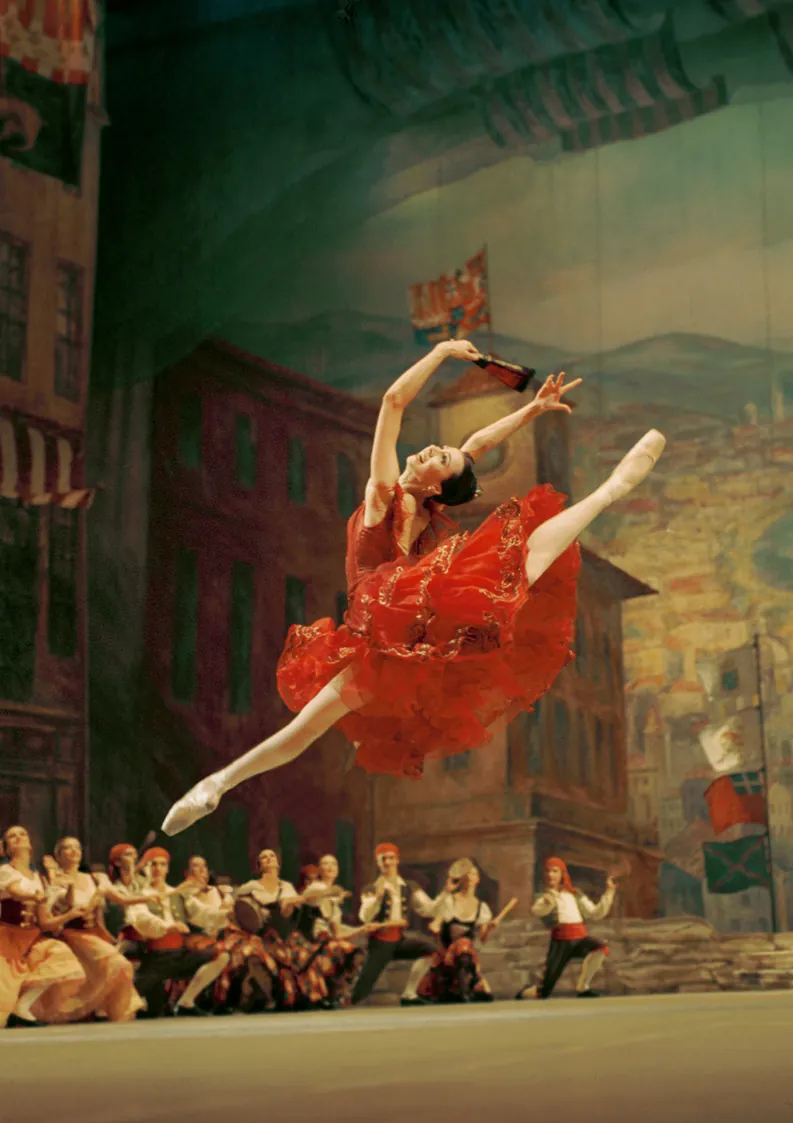
I’ve played over 150 roles, pouring a piece of my life, energy, and emotion into each one. It’s like having a lot of children and not being able to decide which one you love the most. My first major role was in “Swan Lake,” which marked the beginning of my career as a ballerina. Interestingly, my stage ballet career in America and Japan also concluded with “Swan Lake.” Another significant role for me was Kitri in “Don Quixote,” which resonated closely with my character.
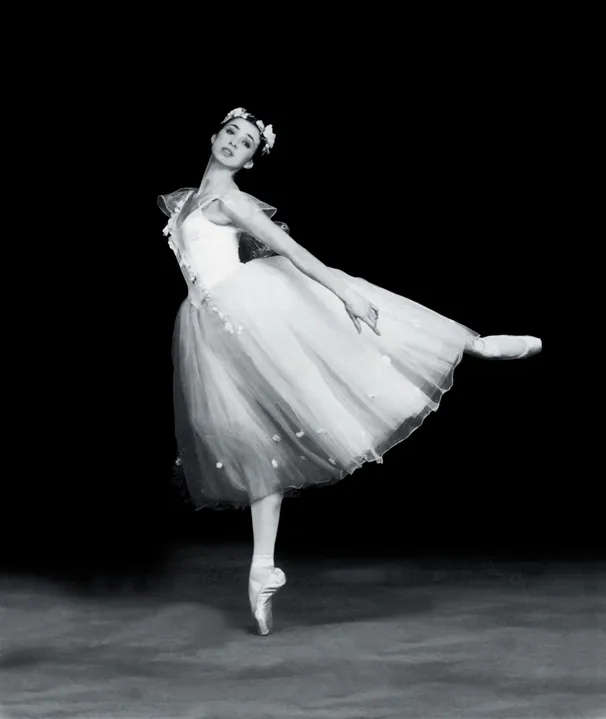
As my stage repertoire expanded, I discovered immense joy in portraying various roles, including those of Sleeping Beauty, Raimondo’s Party, and La Bayadère. Eventually, I delved into dramatic performances such as Romeo and Juliet, Manon, Traviata-themed Marguerite and Armand. Dancing in these productions brought me great fulfillment.
Moreover, my exploration of Balanchine’s choreography abroad helped me connect with my true artistic essence. While Balanchine’s style is grounded in pointe work and classical technique, it provides a unique avenue for artistic expression and encompasses techniques that deeply resonate with me.
What has ballet added to your life?
Apart from my parents, ballet has given me everything I have in my life today – my profession, opportunities, and circle of acquaintances. Throughout my life, I have been fortunate enough to meet many Hollywood stars, presidents, queens, and princes. If it weren’t for ballet, I wouldn’t have had the chance to meet them and form close connections.
What is the best piece of advice you’ve ever received, and will remember it forever?
The profession of a ballerina entails receiving advice and notes every day, fostering an environment where criticism is common. From the outset of my ballet journey, my teachers provided constant feedback to help us improve and grow professionally. Our entire career is dedicated to self-improvement, always striving for the best in our performance techniques.
In terms of life advice, what my family taught me holds particular importance and value. Conscience, kindness, and freedom from envy – these qualities form the foundation of all significant advice.
What emotions do you think watching ballet evokes in a person?
I often observe how a person who comes to the theater for the first time watches a performance. In this regard, I have received many compliments both in Tbilisi and abroad. People have often said, “Once, by chance, I saw your dance and liked it so much that I returned to the theater and became a ballet lover.” I remember what policemen told me in Tbilisi and England: “My wife took me to the performance by force, but seeing these naturally beautiful movements made an indelible impression on me.”
I think ballet creates a fairy-tale world before one’s eyes, where dance, music, movement, content, and history are conveyed together. I would single out our youngest guests – the children I often observe while watching the performance. Today, it is very difficult to surprise a child because, with the help of technology, they get all the information and see different images. By coming here, they enter another world, which greatly affects the development of their creative thinking. They share the perception of natural beauty, and then at home, they draw, dance, develop their imagination, talk, and express their emotions. All these play a very important role in the development of the child.
What do you personally share most often, and what do you teach the new generation?
Today, what I am passing on to the new generation, is the knowledge I have acquired throughout my long career. I was on stage until I was 55 years old, and what I learned all over the world through dancing, meetings, teachers, and choreography, I now share with the new generation of ballerinas and the young people who work in our theater today. I have been the head of the ballet troupe for 20 years. During this time, several generations have grown up. I am very happy and satisfied because they work conscientiously, tirelessly, and with dedication. Our profession is the most difficult and involves working on small details, artistic aspects, and techniques every day. Every role and part needs to find, locate, and then map its key, which takes constant work.
Which stages in the development history of Georgian ballet would you single out?
Georgian ballet has an interesting history of development, consisting of both favorable and challenging episodes. The inception of ballet in Georgia is intertwined with the name of the Italian ballerina Maria Perini, who inaugurated the first studio in Tbilisi. Esteemed figures such as Vakhtang Chabukiani, our generation of teachers, and representatives from other artistic realms, including artist Soliko Virsaladze, were nurtured and educated in this studio. This institution has nurtured numerous generations. I believe Vakhtang Chabukiani ushered in a new era at the Tbilisi Opera Theater – a period characterized by a world-class repertoire. I would describe him as a reformer in male dance. Famous dancers from across the globe, operating within the Soviet territory and beyond, graced the stage of the Tbilisi Opera, drawn by the excellence of our venue. Despite numerous obstacles, I am pleased that Georgian ballet managed to evolve and attain the stature it holds today.
What is the current state of the stage in Georgian ballet and opera today?
As the head of the ballet troupe, I believe we’ve made significant efforts to popularize ballet over the past 20 years. Today, the younger generation is actively interested in the theater and attends our performances. Our leading ballerinas and soloists, such as Nino Samadashvili, Mariam Eloshvili, Davit Ananeli, and Papuna Kapanadze, have grown alongside our audience. Moreover, our troupe includes talented male ballet dancers from Japan, Brazil, and Italy, contributing to our diverse repertoire. They come to Georgia because they are eager to learn and to dance; they are interested in collaborating with us.
It fills me with pride when people call asking for tickets and I have to tell them that all tickets are sold out. For us, working at the theater, it’s the greatest happiness and motivation. A packed theater motivates our dancers, signaling a vibrant appreciation for classical art. Young audiences no longer visit just once; they often engage in discussions about the performances in the theater hall, sharing their insights and impressions with each other. It is very gratifying to see how children sit, listen, and watch the performance. It is difficult for a small child to watch a three-act play. Recently, we had “Sleeping Beauty” and I watched as they sat quietly and watched with interest what was happening on the stage. It’s important for parents to introduce their children to the arts, as it broadens their horizons. Initiatives like the one from Gori High School, organizing Sunday outings to our performances, are commendable. These efforts by teachers and parents nurture the next generation’s appreciation for the arts, which is invaluable.
What is your future vision for the ballet troupe?
The theater is a living organism. It’s important to never stop and to adapt to new environments. At this stage, along with the classical repertoire, we have modern performances as well. At the end of June, we will hold the Tbilisi Festival, where we will present two premieres of modern ballet. The theater should not become a museum – the classics, those we have shown on the stage for 200 years, are offered with new performances and staging to our audience. We breathe new life into them with decorations, costumes, and dynamics. That’s why these plays continuously renew life in the minds of viewers, and the desire to watch them remains strong. We have many offers; we constantly go on tour in Japan, America, Italy, and Spain. In July, we are going to England, and in September, for the first time, we will present “Swan Lake” at the Coliseum Theater.
Our troupe maintains a consistently high standard, attracting attention from producers both in Tbilisi and abroad. This has led to numerous lucrative offers for performances. Our schedule for the upcoming year is meticulously planned, with a series of tours alongside our regular performances in Tbilisi, all aimed at upholding our esteemed reputation.
Every individual who attends our performances and purchases a ticket becomes a valuable supporter, as their contributions enable us to achieve much. Additionally, I take great pride in the fact that our tours serve as a platform to showcase not only Georgian ballet but also the rich cultural heritage of our country. As ambassadors of Georgia through our art, we strive to represent our nation with honor wherever we perform.