Varieties of Georgian Bread
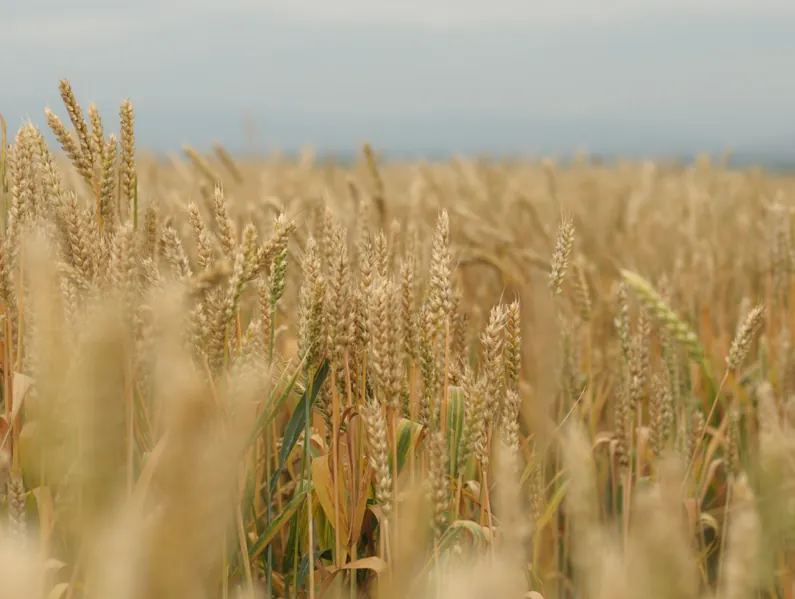
The world knows Georgia as the birthplace of wine, but few realize it is also one of the oldest centers of wheat cultivation and bread baking. Bread has long been a staple food in our country, and several Georgian surnames are linked to its cultivation and production, such as Khorbaladze, Tsomaia, Khabazashvili, Dolaberidze, Dolidze, Khabazi, and others.
Historically, Georgia produced enough wheat to sustain itself, and this wheat was ground at water mills. The stone used for grinding was called a “Dolab.” In many Georgian villages, these water mills have been preserved to this day, where corn is now primarily ground.
For Georgians, bread symbolizes family and national strength, often being dedicated to prayers. Touching a knife to Georgian bread was considered a sin—it was always broken by hand.
Georgia is home to several endemic wheat varieties.
For example, the “Dika” variety was cultivated both in the mountains of Svaneti and on the plains of Kakheti. Other native varieties include “Shavfkha,” “Doli,” “Zanduri,” “Red Drum,” “Asli,” “Tavtukh,” “Spicy Wheat,” and millet-like crops such as Ghomi, Ghomi’s Ghomi, flax, and millet.
Georgian cultural diversity is reflected in the unique ways bread is made. In the mountains of Eastern Georgia, a mixture of barley and rye was preferred, while in Kakheti, wheat bread was predominant. In Western Georgia, people often consumed Ghomi and Mchadi instead of traditional bread, each with its distinct name. For example, bread made from a mixture of wheat and millet was called “Mchadpura,” a blend of barley and wheat was called “Kerchrela,” barley and rye was known as “Kersvila,” and barley and wheat was referred to as “Kerdika.”
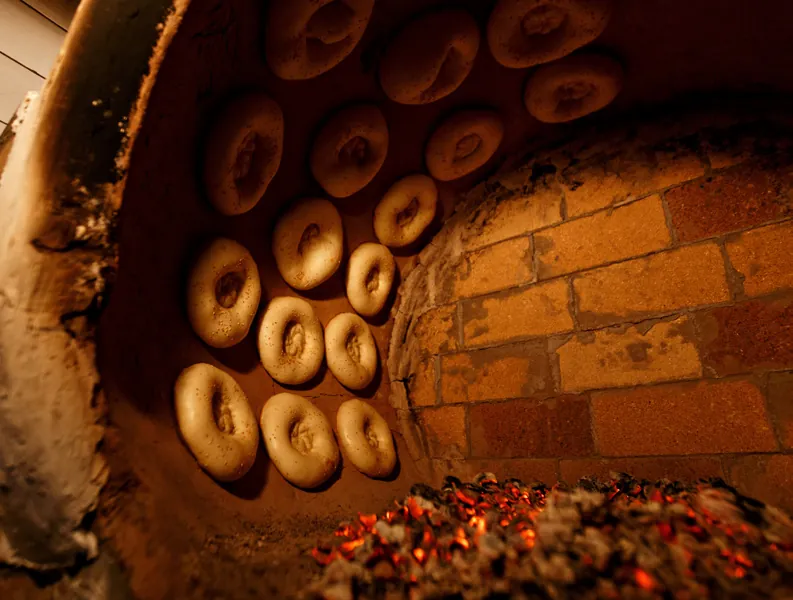
One of the most common types of bread in Georgia is Tonis Puri (Tone bread), baked in a traditional oven called a tone. It is a daily staple for many Georgians. In ancient times, Tonis Puri was shaped in different forms for special occasions. For instance, during weddings and travels, special “mother’s bread” was baked. Thin, round loaves were prepared for mourning ceremonies, and small tone breads were made for warriors to carry in their backpacks.
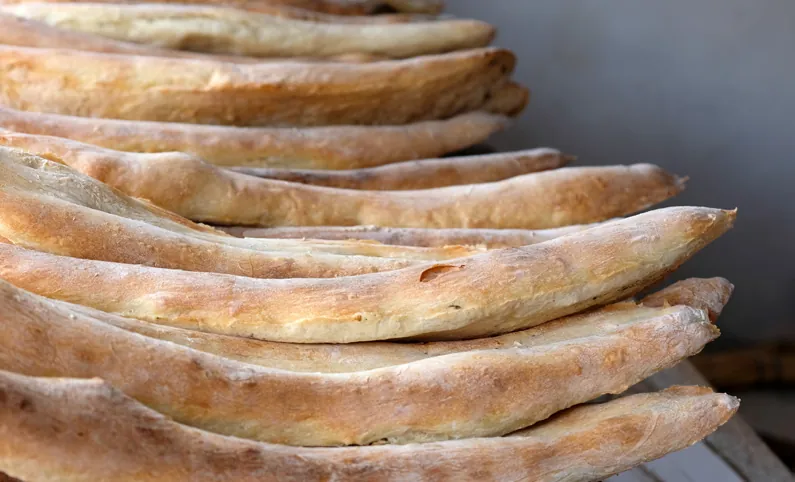
Even today, bread is still baked in various shapes in the tone. For example, Shotis Puri, or simply shoti, is a traditional Georgian bread made from white flour and shaped like a canoe. It is long and curved, with a thick shaft, a thin opening, and a pointed end. In Kakheti, shoti is baked long and sword-like, while in Kartli, a shorter version is common. Shoti is often served on festive occasions.
Lavashi is also baked in the tone, but it differs from the Asian lavash found in other countries. While Asian lavash is made from unleavened dough and is long and thin, Georgian lavashi is made from yeast dough, making it thicker and round in shape.
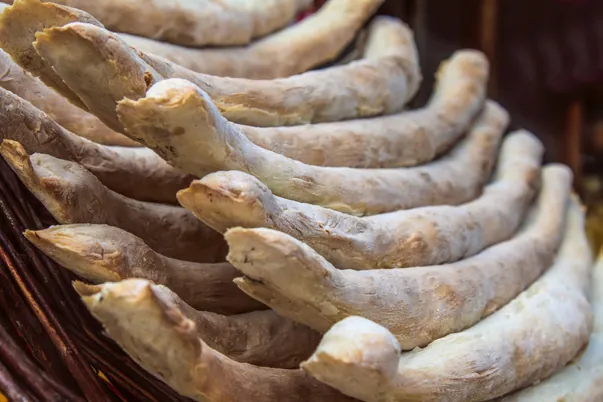
Meskhuri bread also holds an important place in Georgia, as it is baked in an oven rather than a tone. Some types of Meskhuri bread have been forgotten, while others have survived to this day. For instance, Fodola bread, traditionally baked for holidays, is made from yeast dough using wheat flour and is long and thin.
Traditionally, lavashi was the first bread to be baked in a heated oven, followed by other types. Meskhuri Shoti is round with a hole in the middle and is coated with egg on the outside. Another type of Meskhetian bread is Chatsekili, which is round and slightly flattened. When placed in the oven, it was poked with a matchstick, giving it the name “Chatsekili bread.”
Somini bread is still baked in Meskheti today. Made from “Doli” or “Kercheli” flour, it is baked last, as it requires a relatively cool oven. It takes about an hour to an hour and a half to bake.
In the old days, families would bake several types of bread at once, enough to last for about 10 days. These breads were eaten in a specific order. If a family baked shoti, chatsekili, and somini, they would first eat the shoti because it dried out the fastest, followed by chatsekili, and finally somini, which could be stored the longest.
The tradition of baking bread plays a significant role in the cultural development of Georgia, and the variety of Georgian bread stands as a testament to this rich heritage.