Chacha and Its Distillation Technology
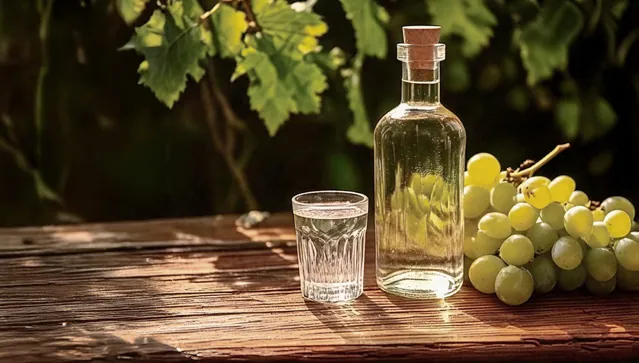
Georgia is renowned as the birthplace of wine, a fact supported by its 8,000-year-old tradition of winemaking in qvevri. However, wine is not the only iconic beverage crafted by Georgians. Equally cherished is the traditional Georgian vodka, “Chacha,” which holds a significant place in the country’s history and culture.
The exact origins of Chacha production remain unclear, but historical records suggest that Georgians were distilling this spirit as early as the 17th century. Its deep roots and enduring popularity reflect the integral role Chacha plays in Georgia’s heritage.
The history of Chacha is deeply intertwined with Georgia’s ancient winemaking traditions. Over centuries, the technique of distilling Chacha has evolved, and it has long been a staple in Georgian households, with many families still producing it at home today.
In ancient times, Chacha was even valued for its medicinal properties. Traditionally made from grapes, this strong alcoholic beverage has diversified over time, with modern variations crafted from a variety of fruits.
Chacha is traditionally made from crushed grapes left over after wine production. This practice explains why Georgian families typically prepare Chacha following the grape harvest. In eastern Georgia, when wine pressed in qvevri during the fall is poured in early spring, the leftover grape pomace (crushed grapes and skins) is removed from the qvevri and used to produce Chacha through a traditional distillation process.
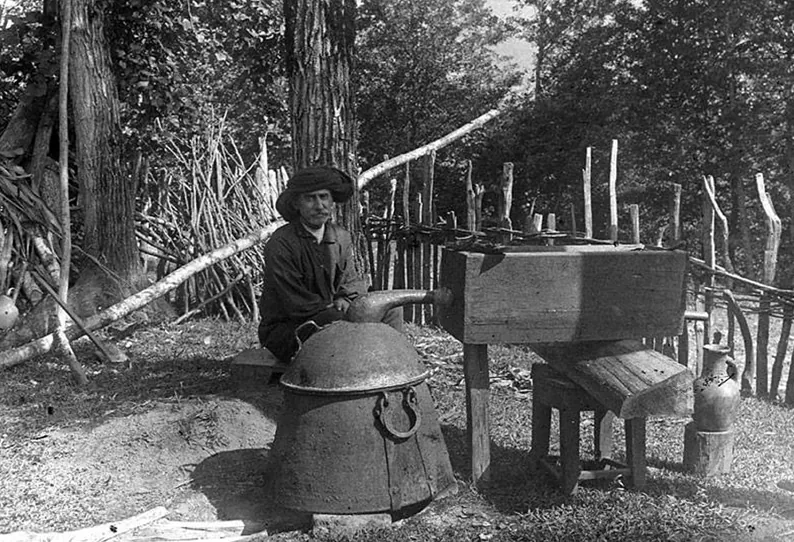
A copper pot is placed on the fire and covered with a zarpushi (a lid used for distilling vodka). The zarpushi is sealed with gray clay, and a geja (a vessel filled with water) is attached on top. Inside the geja, a tube passes through, and the joint is sealed with corn flour. A chincha (a cloth-like material) is wrapped over the joint to ensure a tight fit.
The Chacha placed in the vodka boiler is heated until it begins to boil. During the boiling process, alcohol vapor rises from the zarpushi and passes through the cooled tube inside the geja. As the vapor condenses, droplets form and are collected in a glass vessel, resulting in a liquid known as Chacha. In western Georgia, the resulting mass is often returned to the vodka boiler for a second distillation, enhancing the drink’s strength and potency.
In eastern Georgia, the process of distilling vodka is called zaodoba and is as ritualistic as the grape harvest. Neighbors, friends, and relatives come together to distill vodka and celebrate with a feast. This communal process is a source of great joy and camaraderie. If you ever have the chance to witness vodka distilling in Georgia, it’s an experience not to be missed.