Distinctive Dishes of the Georgian Highlands
Georgian cuisine is celebrated for its uniqueness and diversity, but in this article, we’ll explore the distinctive dishes of Georgia’s highland regions.
The cuisine of the highlands of Adjara stands out as particularly unique. Here, an impressive 95% of dishes are prepared with butter, giving traditional Adjarian dishes their signature richness and high-fat content.
Borano: Borano: A Highland Classic – Borano is perhaps the most commonly prepared dish in mountainous Adjara and one of the most beloved in the region’s cuisine. Known for its high caloric content, this dish perfectly complements the traditional lifestyle of the Adjarian people, marked by constant labor and physical exertion. Daily activities such as harvesting grain, gathering hay and firewood, or hunting demand energy-rich meals like Borano.
Over time, both the original recipe and several modified versions of Borano have been preserved in Adjara. Its preparation is relatively quick and simple. Traditionally, Borano is made using yagi (butter derived from kaymak) and fermented cheese. Finely chopped cheese is placed in hot water, and burnt butter is poured over it. Alternatively, mountain-spun cheese is chopped, soaked in hot water, transferred to a cold container, and topped with melted butter.
While the traditional recipe includes only cheese, modern variations incorporate ingredients like potatoes, eggs, or buckwheat flour. However, the authentic essence of Borano lies in its simplicity, with cheese remaining the centerpiece of the dish.
Kaisafa: Kaisafa: A Sweet Highland Delight – In the highlands of Adjara, locals also prepare a traditional dish called Kaisafa. Made from dried plums, the dish begins with boiling the plums until tender. Once cooked, they are topped with walnuts and sugar and finished with a drizzle of burnt butter. The result is a simple yet flavorful treat that embodies the region’s culinary traditions.
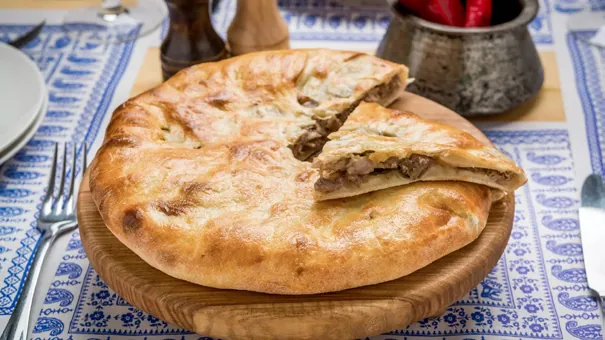
Kubdari Kubdari: A Svaneti Staple – In Svaneti, one of the most popular dishes is Kubdari. This hearty dish is primarily made with finely chopped beef, mixed with onion, garlic, dill, coriander, cumin, and an assortment of spices, including the region’s distinctive Svanuri salt. The flavorful filling is encased in well-kneaded dough and baked to perfection, ensuring both sides are evenly cooked.
Meskhetian Cuisine: Apokhti Khinkali and More – Meskhetian cuisine is renowned for its distinctive flavors, with dishes like apokhti khinkali standing out. Goose apokhti khinkali is a unique specialty of Meskheti, with a preparation tradition deeply rooted in nearly every village of the region.
Apokhti refers to salted and dried meat, traditionally reserved for special guests and festive occasions. It was a staple on celebratory tables, especially during New Year celebrations. Unlike regular khinkali, goose apokhti khinkali has a rectangular shape, giving it a distinctive appearance.
Meskheti is also known for a variety of intriguing pastries, including Meskhuri kada, nazuki, and khachapuri, which showcase the region’s rich culinary heritage.
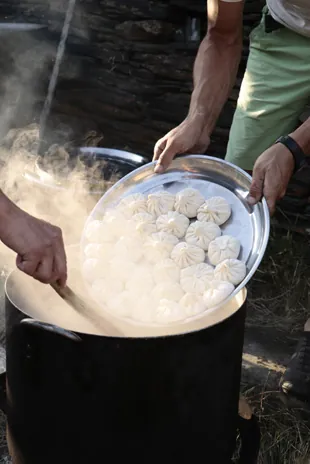
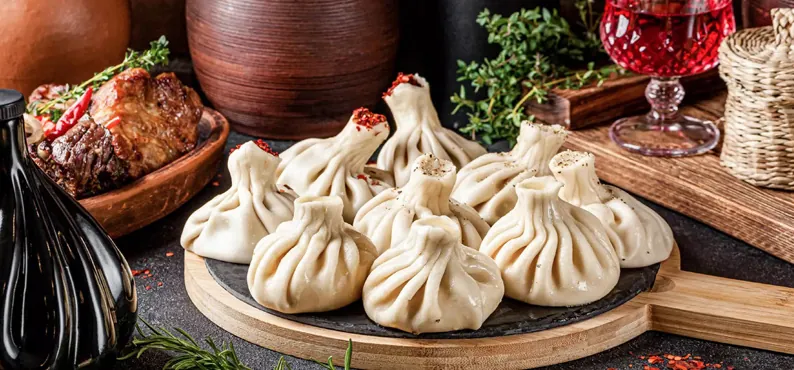
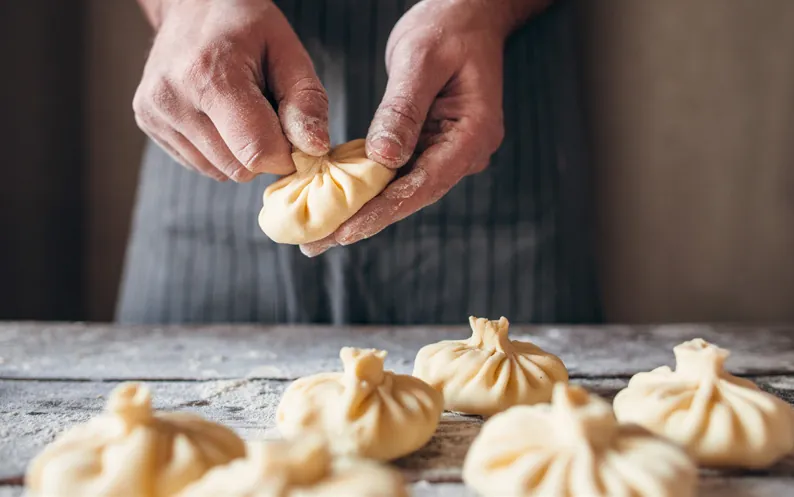
Khinkali: Khinkali: A Highland Treasure – No discussion of Georgian highland cuisine is complete without mentioning khinkali, a dish deeply woven into the fabric of Georgian culture. While khinkali is now enjoyed across the country, its origins trace back to the mountainous regions of Pshavi and Tusheti, where it was first created before spreading to the plains.
In these high-altitude regions, khinkali was especially cherished during heavy snowfall, providing a hearty and warming meal for the cold months. Originally made with lamb, the filling evolved over time, with a mixture of pork and beef becoming the more common choice in the lowlands.
Dambalkhacho: A Pshavian Heritage – A highlight of this article is dambalkhacho, a dish deeply rooted in Pshavi’s culture and traditions. With a history spanning over two centuries, dambalkhacho is believed to have been a staple in Pshavi long before the 1800s.
The dish is made from curds left after churning butter. These curds are shaped into balls, rubbed with salt, and dried for several days in a special container made of sticks, called a dzoban, often suspended above a central fire to absorb the smoke. Once dried, the curd balls are stored in a clay pot to maintain a stable temperature, sometimes buried in the ground for optimal preservation.
The fermentation process lasts about two months. During this time, the curd balls develop a unique aroma and taste, both distinctive and beneficial. As the curds ferment, they form a rind while the interior ripens to a golden hue, creating a delicacy cherished for its rich flavor and historical significance.