Djaba Diassamidze
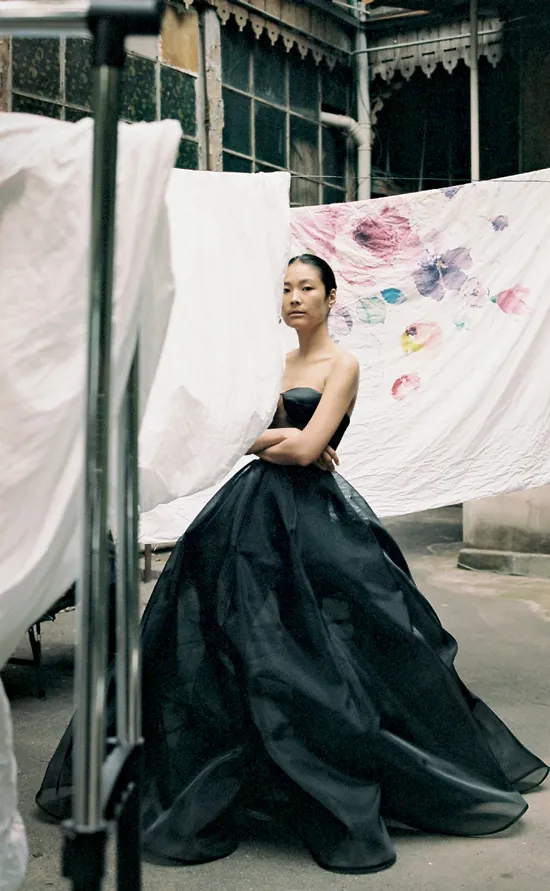
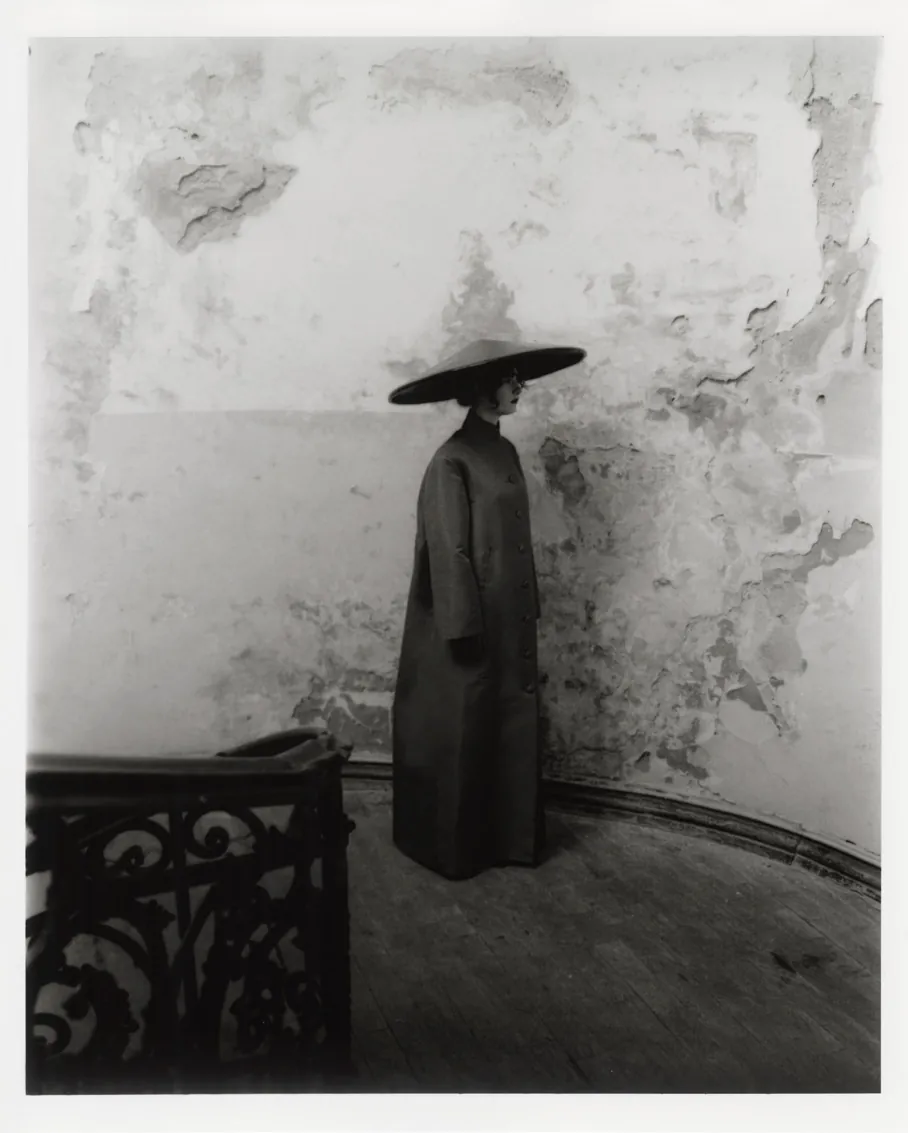
Djaba Diassamidze is a Georgian designer based in France, known for his distinctive style that blends modern aesthetics with traditional artistry. Born in Tbilisi to a family of artists, he has a half-French mother, Nutsa Tsuladze, daughter of the renowned Georgian translator Sergi Tsuladze and Madeleine Verdeau. Growing up between Georgia and France, he was deeply influenced by both cultures. France, in particular, provided an ideal environment for him to develop new perspectives on design while expressing his Georgian heritage. Today, Djaba Diassamidze lives and works in Paris, actively shaping the world of haute couture.
We are pleased to present an exclusive interview with designer Djaba Diassamidze for our magazine.
What is a typical day like for you in Paris?
I start my day by waking up, having breakfast, and then going for a walk. Walking is a major source of inspiration for me—I spend most of my day wandering through Paris. If I don’t have scheduled meetings, I visit different places on my own and meet with people I collaborate with, such as fabric suppliers, hat makers, and glove makers. Each day is a mix of spontaneity and planning. I often visit exhibitions; I’ve been drawn to the Louvre since childhood and have a sentimental connection to it. My day usually ends with lunch or dinner with a friend or a client. I love being outdoors and socializing, whether in restaurants or other gathering spots. At home, I also enjoy hosting guests— I’m a very social person by nature.
What are you currently working on?
Right now, I’m working on individual orders and developing a haute couture collection. I have dedicated days for customer meetings. I refer to my current collection as “archival,” but in reality, it’s not truly archival because I’m constantly adding new designs. I keep the collection in a private space where I meet customers directly. The pieces are refined and tailored to individual clients, with modifications possible, such as changing the fabric, color, or length. I find this process incredibly rewarding because it allows me to interact personally with my clients. Occasionally, I create capsule collections for stores, but I’ve put that on hold for now. I made this decision a few years ago, though I may return to it in the future.
How would you describe the “Djaba Diassamidze” brand?
That’s a difficult question—it’s like asking me to define myself. I haven’t found the perfect description yet; I’m still searching.
Do you have an idol?
I can’t name just one, but my inspiration comes from all the great figures who have shaped fashion history. It starts with the earliest designers and includes legends like Balenciaga, Givenchy, Yves Saint Laurent, Chanel, Gaultier, the pioneering Japanese designers, and the French avant-garde of the 1980s. Each of them has left a profound mark on fashion. Today’s approach to fashion is different, but every designer has contributed something valuable, and whether we realize it or not, we all learn from their legacy.
What has had the biggest influence on your career? Can you share a story that brought you great success?
I believe everything is connected. From my first dress to my latest creation, it all forms one continuous story. Certain moments stand out to others—perhaps because they were featured in the press or worn by someone notable—but for me, the greatest influences have been the women around me since childhood. My mother, her friends, actresses I admired in films, characters in books, friends I’ve made, and even strangers I’ve observed on the street—all of them have shaped my creative vision. Maybe that’s why I love walking so much—it allows me to encounter and absorb as many different people and styles as possible.
Do you remember when you first became interested in design?
It was completely innate—so much so that I don’t remember when it started. Just as I can’t recall when I first learned to speak, I can’t pinpoint the moment my passion for design began. It has always been part of me.
Do you remember the first outfit you designed?
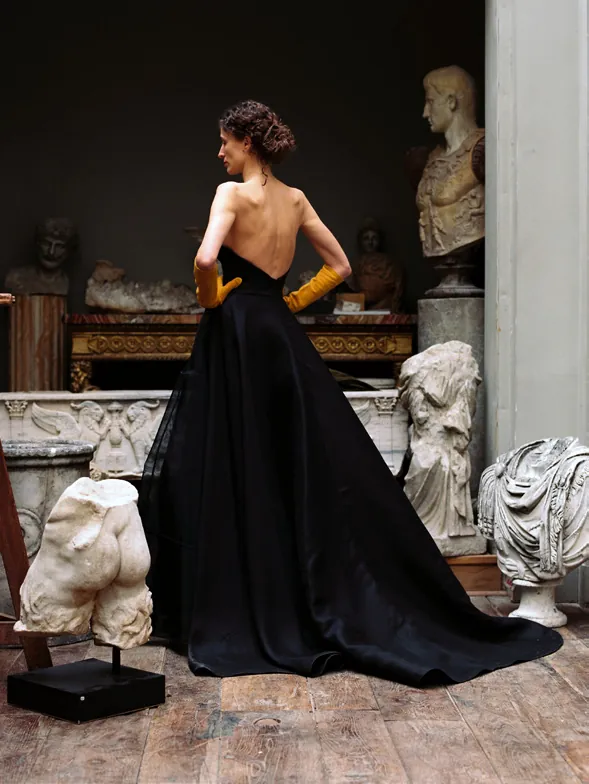
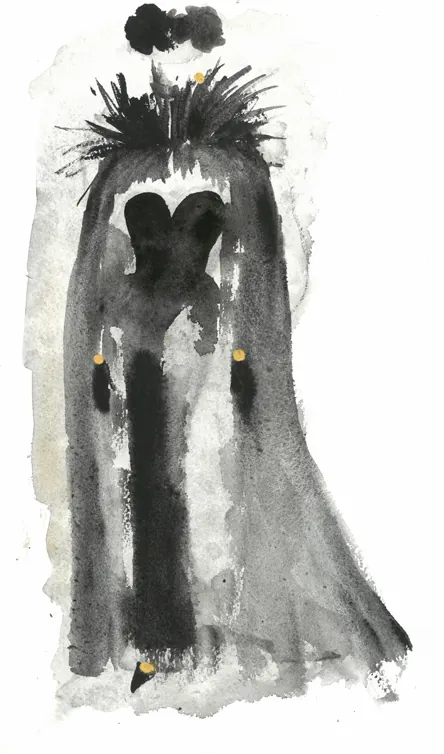
Yes, I remember it vividly. It was a two-piece look: a black dress with a rectangular cutout at the back and a coat that blended avant-garde and classic elements.
Is there a connection between the first dress you designed and your current work?
Absolutely. In truth, I’ve never strayed from what I’ve been searching for, and I’ll likely continue exploring it for a long time. The first dress had a distinctive cutout—a frame of sorts. That concept of framing has remained with me ever since. A frame can be created with fabric, color, or structure, but ultimately, style is the defining factor. Without style, everything becomes chaotic. Of course, things evolve, but the essence remains unchanged. It’s something deeply personal and instinctive, making it difficult to put into words.
You started with a black dress, and black remains a signature element of your collections. Why do you love black so much?
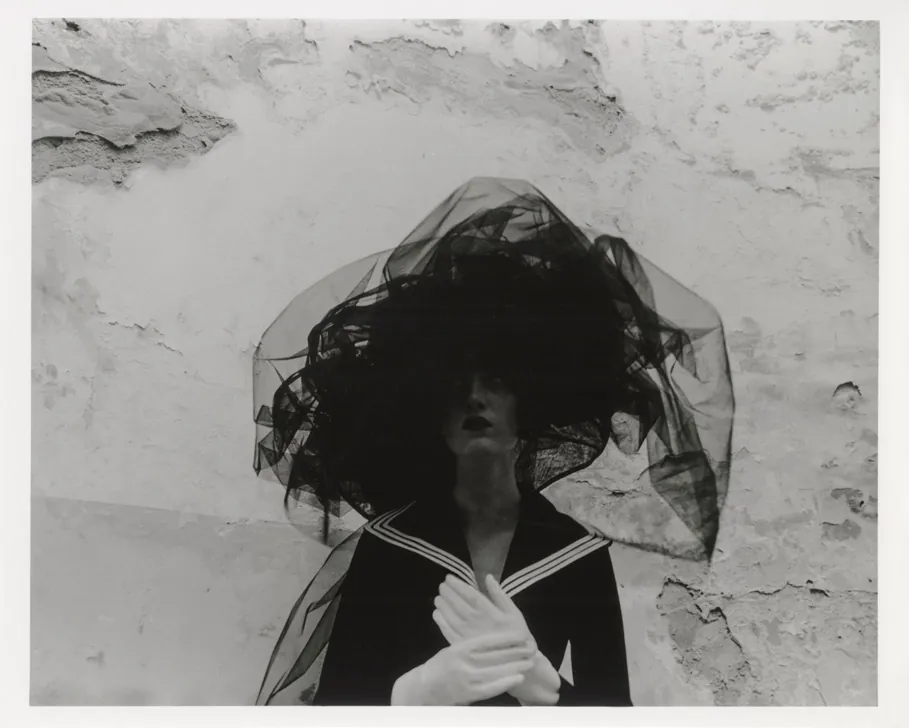
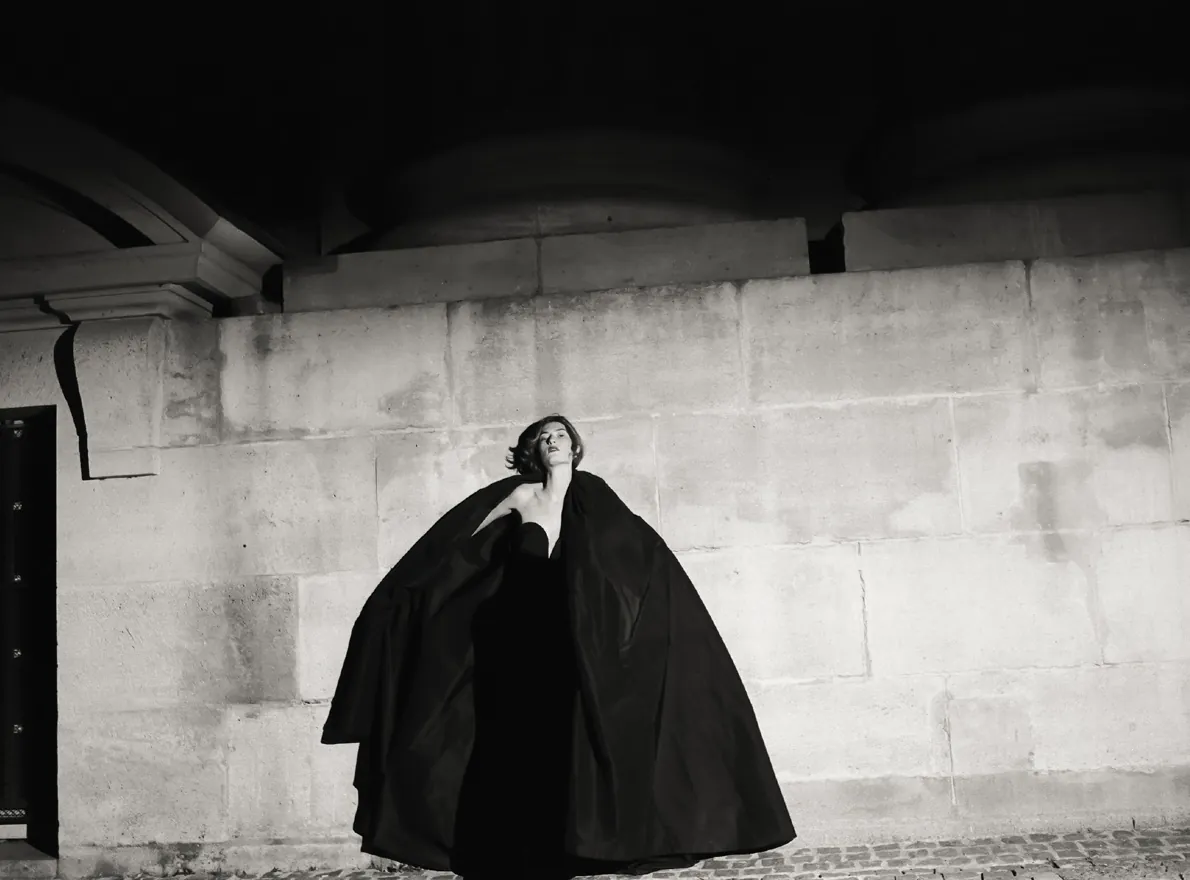
Black is both highly visible and the least intrusive—it stands out while maintaining a sense of balance. It creates clean, precise lines, shaping silhouettes exactly as I envision them. In this sense, black is both simple and complex. It’s not just a color—it’s a medium that varies dramatically depending on the material, whether silk, velvet, or wool. It’s an essential academic tool for me.
Is black your absolute favorite color?
Yes, for my work. Personally, I prefer navy blue. In my daily wardrobe, I tend to gravitate toward navy, but from late spring to early autumn, I enjoy wearing white and natural straw tones.
Two homelands—How do Tbilisi and Paris influence you?
Both Tbilisi and Paris affect me emotionally, which is crucial to my work. Each city has a distinct personality, expressed through its visuals, architecture, and even its climate. They are entirely incomparable, yet both have left a deep aesthetic imprint on me. The women in my family, both Georgian and French, have taught me so much. While Paris is the historical heart of fashion, Tbilisi has influenced me visually and artistically. The way people live is reflected in their clothing, and the essence of a Tbilisi woman is very different from that of a Parisian woman—because the cities themselves demand different styles and codes.
You were born into a family of artists. Georgian society, and beyond, knows your grandfathers — Niaz Diassamidze, an iconic figure in Tbilisi, and translator Sergi Tsuladze (who translated The Knight in the Panther’s Skin into French, among others) well. You come from a Franco-Georgian family. What does your family mean to you?
Family is very sentimental to me, and I never thought that my family was more interesting than anyone else’s. In general, there is nothing better than family, and everyone has their own family that is the most important. The only thing I can say is that in our family, art, and even style, were very important across different generations. All of this, of course, had a great influence on me and heightened my art appreciation, sharpened my eye, and expanded my vision. It’s like someone who grew up in a family of mathematicians—probably perceives mathematics differently. That same level of need for art seemed to grow naturally within me.
Your brother, Niaz Diassamidze, is a musician. How does his music inspire you?
I listen to Niaz’s music very often. Since I live in France while my parents are in Georgia, hearing his voice is incredibly sentimental for me. It reminds me of my family, my home, and my childhood. I don’t know if I can be objective, but I deeply love his music and lyrics. Sometimes, I hear him as my brother; other times, I hear him as the artist Niaz Diassamidze. Either way, his music brings me immense joy.
What are your future plans?
Right now, I’m working on creating a space—I’m not yet sure whether it will be solely for my work or something more. I’m also focusing on interior design and expanding my collection with a new line. Lately, I’ve been drawn to designing more daytime clothing. While this may seem like a natural extension of my work, it represents a new creative challenge for me.