Ფირუზა/firuza of Borjomi:
A Unique Architectural Masterpiece
The architecture of a city lost in greenery, surrounded by beautiful forests, alpine meadows, impressive views, and a rich biodiversity, this is Borjomi, a centuries-old center of Georgian culture that leaves no visitor indifferent.
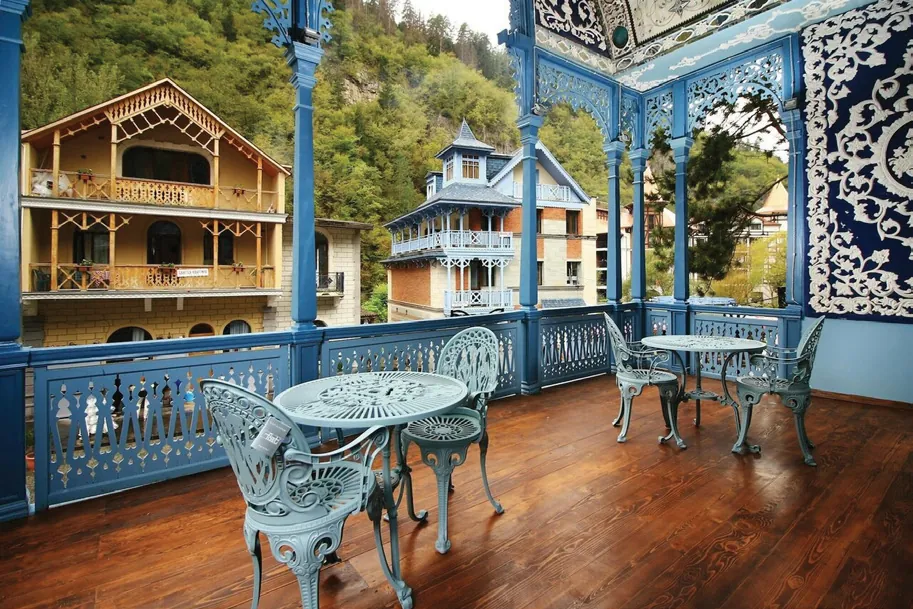
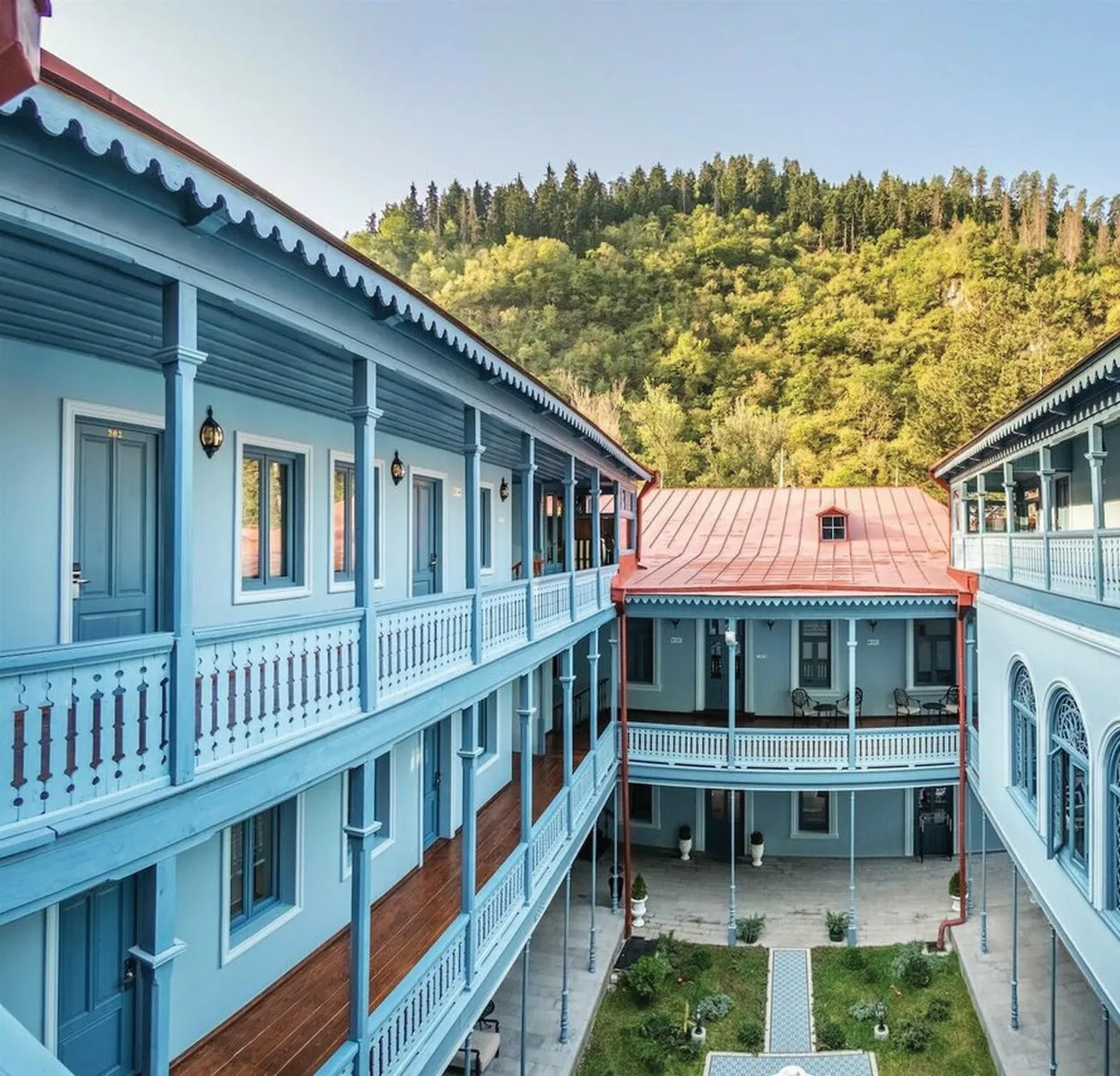
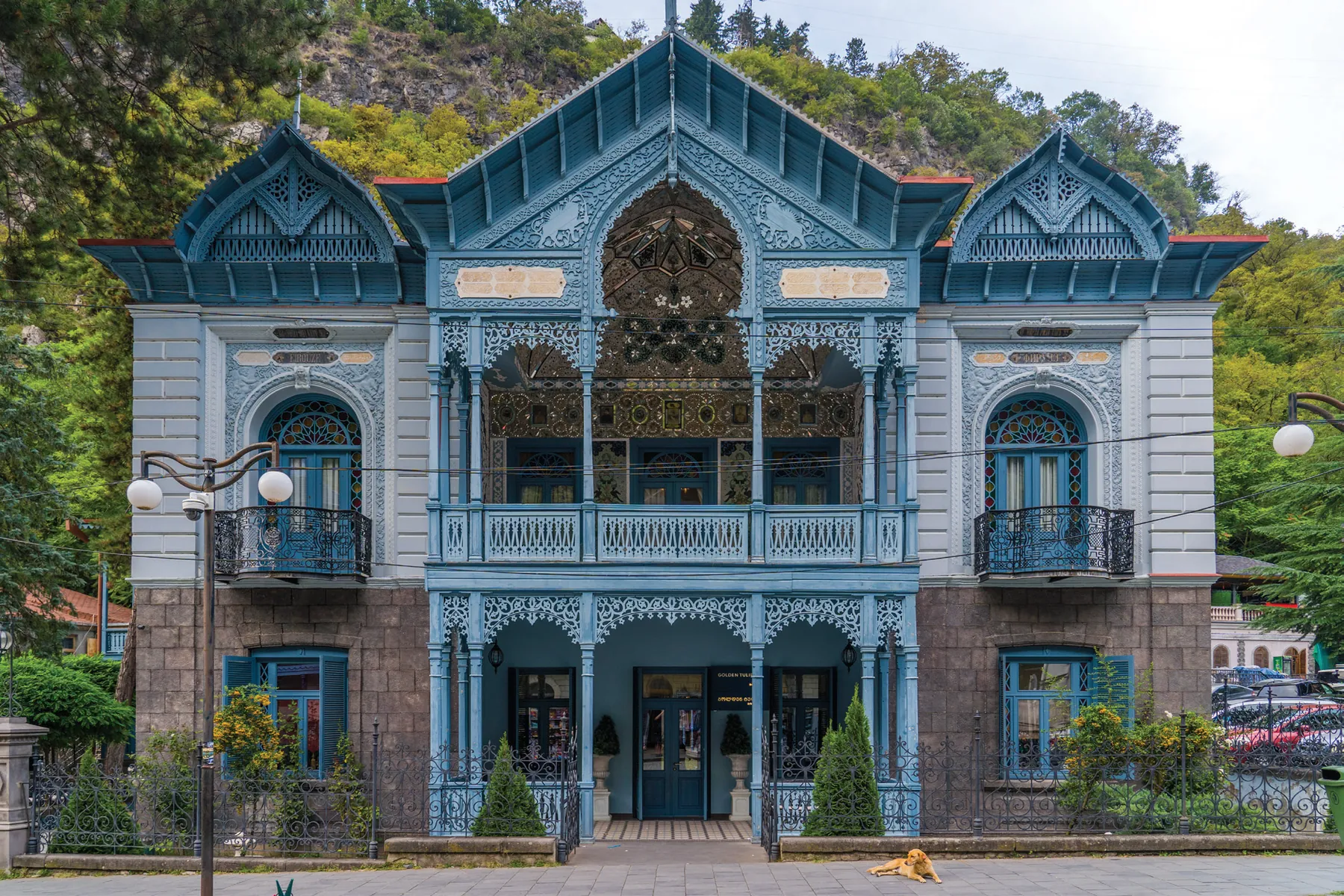
Borjomi is one of Georgia’s most important resorts, a place that has been intertwined with nature, history, and human creativity for centuries. Its parks, unique mineral water, 19th-century architectural landmarks, and the tranquility flowing from the depths of the mountains create an environment where the passage of time can be felt at every step. “Firuza” (meaning turquoise), often called Borjomi’s Blue Palace, is a continuation of the city’s unique spirit. A building full of life and colors, set against the backdrop of a magnificent cultural heritage, Firuza stands as one of the city’s most distinctive architectural masterpieces and a symbol of Borjomi itself. Beyond its architectural value, Firuza is also a symbol of beauty, where history and modernity meet. Though striking in its colors and forms, it blends harmoniously with its surroundings, reminding visitors just how diverse and sophisticated Georgian architecture can be.
This famous sanatorium is located at the entrance to Borjomi Central Park, on Baratashvili Street in the Samtskhe-Javakheti region. The turquoise-blue house was originally the summer residence of Mirza Riza Khan, the Iranian Consul General in the Caucasus, who commissioned its construction in 1892 as his retreat. After the consul’s death, the uniquely designed house was transformed into a sanatorium. In 2016, following careful restoration by Persian specialists, “Firuza” became part of a hotel chain.
The turquoise, beautifully carved facade of the building in the Persian style instantly catches the eye of every passerby. The interior is equally remarkable. The balcony walls and ceiling are covered with sparkling, mirror-like decorative patterns. A small plaque at the entrance reads: “Mirza Riza Khan.”
This cultural heritage monument represents a fusion of pseudo-Moorish Iranian, Georgian, and European architectural traditions, reflecting a fascinating period in Georgian-Persian relations.
Buildings often speak silently about a country. Borjomi’s “Firuza” is a mirror in which you can see the diverse cultural heritage of Georgia from multiple perspectives at once. A country where culture never stops developing. Within it, the light of ancient traditions, the power of natural inspiration, and the human drive to create beauty and leave a unique mark all come together. This turquoise building is a small but brilliant element of Georgia’s centuries-old history, reminding us just how impressive the country’s architectural heritage is in uniting the old with the new.