Parks
Natural parks and botanical gardens have been established for centuries in various parts of the world as spaces for science, aesthetics, and recreation. Their development is often linked to aristocratic gardens, the tradition of plant collecting during the colonial era, and the later creation of recreational areas open to the public. Today, such spaces are no longer merely tourist attractions. They also play an important role in promoting environmental education and protecting biodiversity.
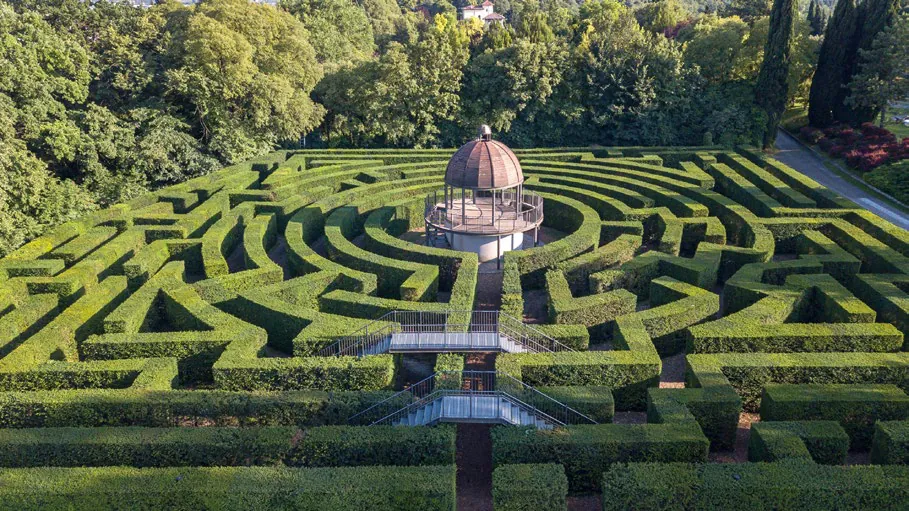
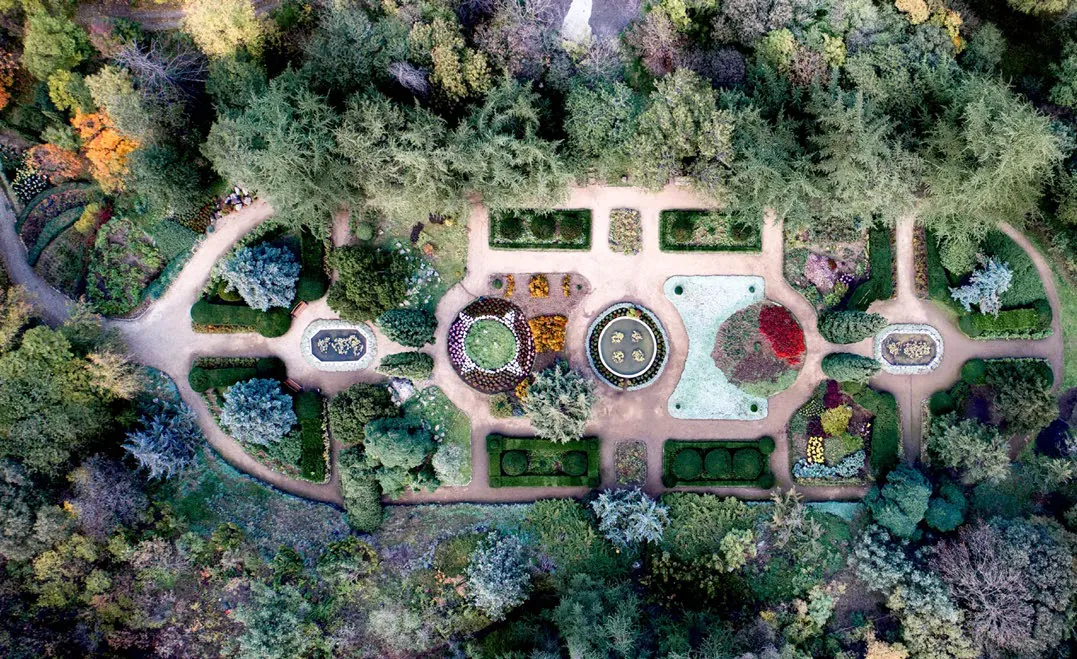
Parco Giardino Sigurtà in Italy is considered one of the most famous historic gardens in Europe. Covering approximately 60 hectares, the park combines diverse landscapes and offers visitors a unique natural environment. Its history dates back to the 15th century, when the area was part of a private estate.
The park opened to visitors on March 19, 1978. Initially, it could be explored by car through the so-called “auto-guide” system, but since the 2000s, the space has become fully accessible to pedestrians. Today, the park welcomes visitors from March to November and attracts more than 400,000 tourists annually.
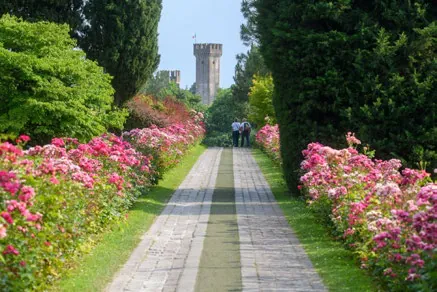
One of the park’s main attractions is the one-kilometer rose avenue, Viale delle Rose, where tens of thousands of roses bloom from May to September. The avenue offers views of the historic Scaligero Castle in Valeggio sul Mincio. Another point of interest is the labyrinth, opened in 2011, which is a distinctive and carefully designed space.
The park also features 18 water gardens, small ponds where water lilies, hyacinths, and lotuses grow. Their peak flowering season is in June and July, and during this period, the area is especially impressive.
Another distinctive feature of Sigurtà Park is its wide green lawns and centuries-old deciduous forests, which create an environment in harmony with nature. The park is particularly famous for its Tulip Festival. Over time, the number of tulips has increased from 5,000 to more than one million. Every year, in March and April, the festival attracts around 100,000 visitors. The event has received several international awards, including “Italy’s Most Beautiful Flowering Park” in 2016 and “The World’s Most Beautiful Flowering Park” in 2019.
The park can be explored on foot, by bicycle, by golf cart, by electric shuttle, or by panoramic train. Its infrastructure includes picnic areas, family-friendly routes, and educational activities for children, making it a multifunctional recreational space.
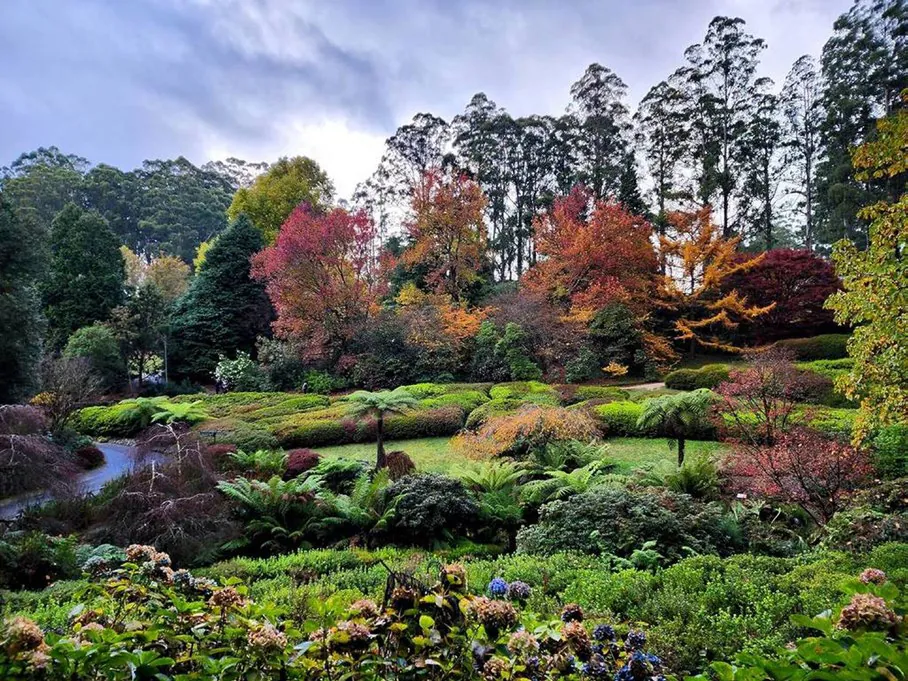
Another outstanding example of such gardens is the Dandenong Ranges Botanic Garden in Australia. Covering approximately 50 hectares, the garden is located at an altitude of nearly 600 meters above sea level and is distinguished by its ornamental plants typical of a temperate climate. The volcanic, well-drained, and slightly acidic soil creates ideal conditions for rhododendrons, which are among the garden’s greatest treasures.
The garden features more than 50,000 plants, including rare and endangered species. The Japanese-style garden is particularly popular, and the cherry blossoms in September and October add special beauty to the landscape. Picnic areas and open lawns allow visitors to enjoy time in nature in a peaceful and comfortable environment.
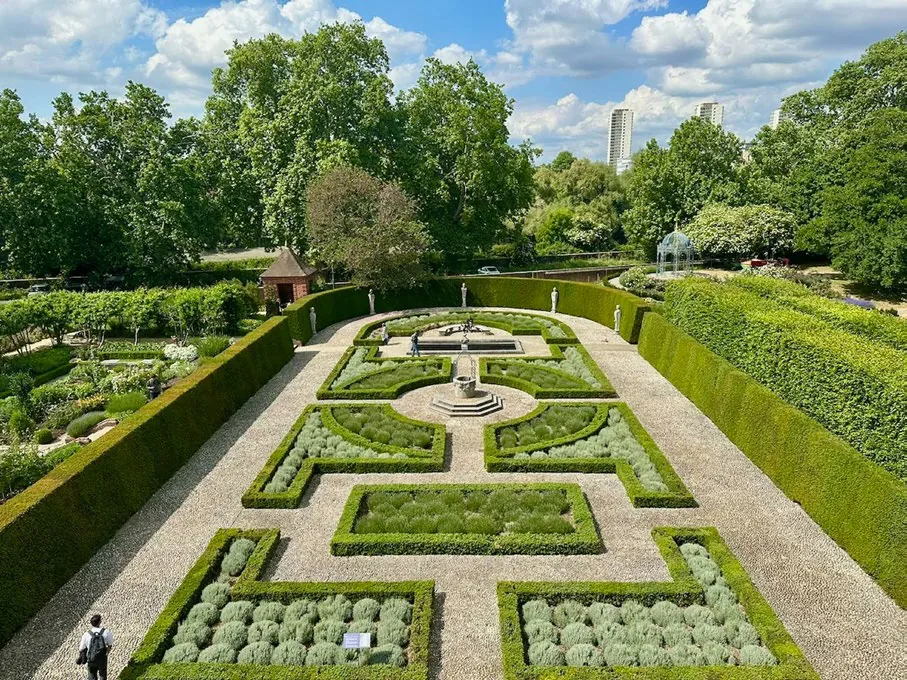
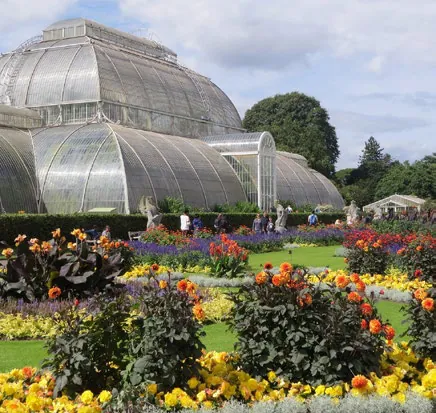
The Royal Botanic Gardens, Kew, in London, is considered one of the most influential botanical centers in the world. Founded in the 18th century, the gardens are now a UNESCO World Heritage Site and hold one of the richest collections of plants in the world.
Kew Gardens is home to tens of thousands of species from almost every region of the world. The grounds include unique greenhouses, among them the famous Palm House, which displays tropical plants, as well as historic buildings and notable examples of landscape architecture, including a Japanese-style temple.
Kew Gardens is not limited to visual beauty. It is also a global scientific center where research is conducted on biodiversity, ecosystem protection, and climate change.
It also houses one of the world’s largest seed banks, aimed at preserving rare and endangered plant species.
Georgia is also distinguished by its remarkable natural diversity, which is particularly reflected in its protected areas and botanical gardens. Parks created in different regions of the country not only attract visitors with their unique landscapes, but also play an important role in ecosystem protection and environmental education.
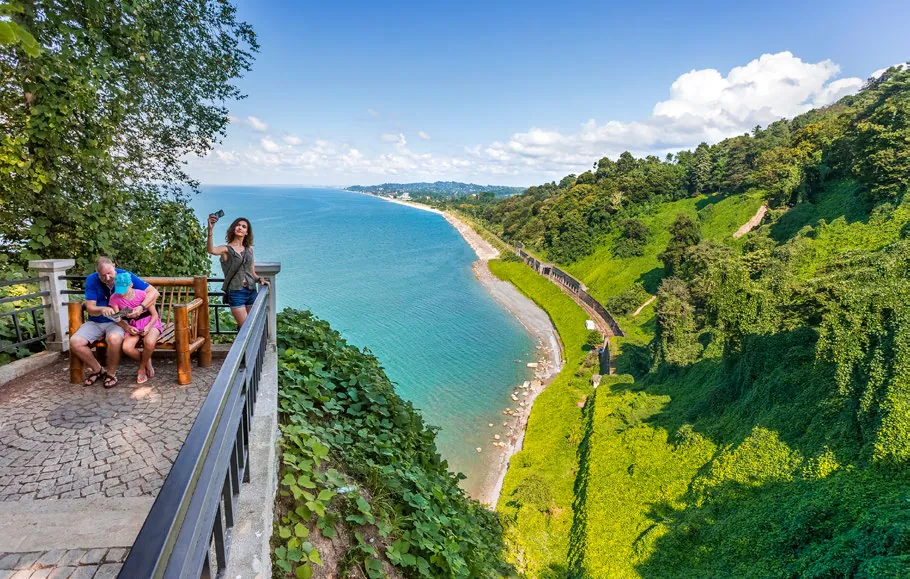
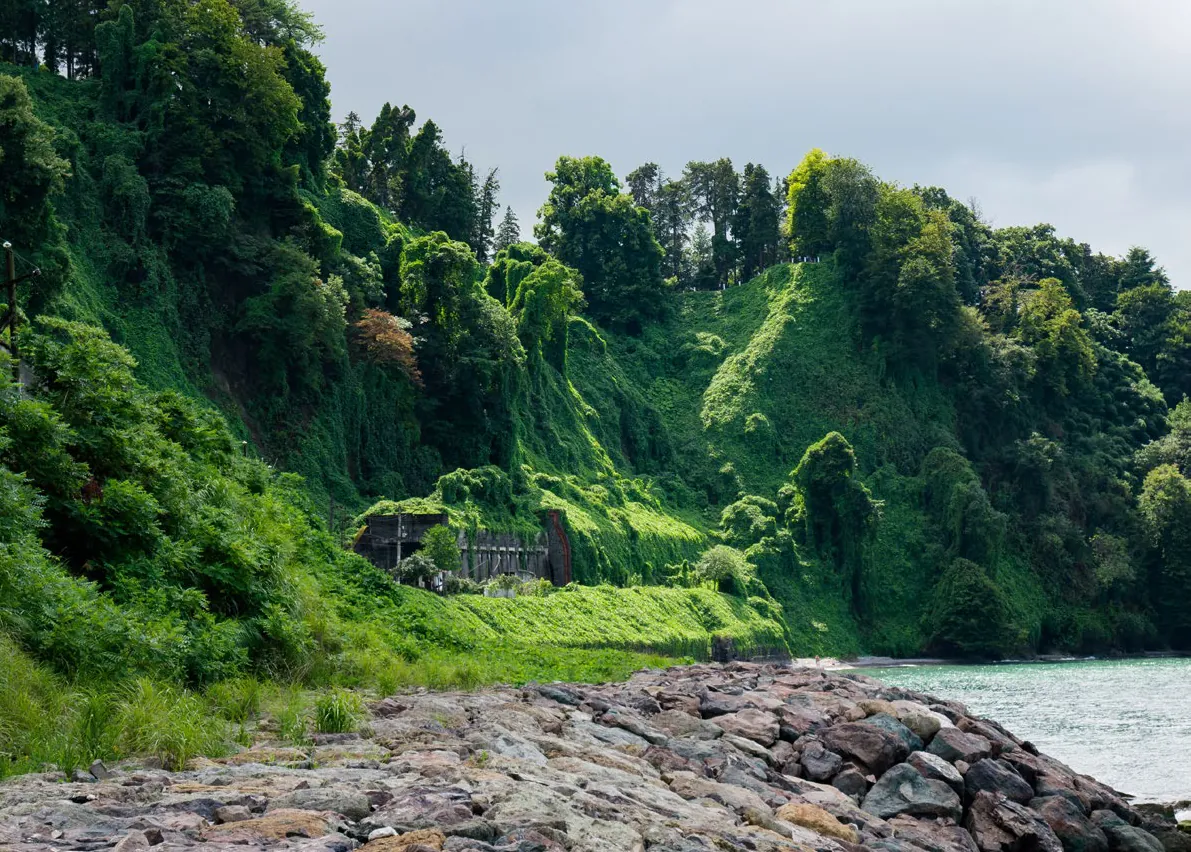
One of the most impressive spaces is the Batumi Botanical Garden. The historical introduction of plants to Adjara began in the 19th century. In 1881, the creation of the first botanical garden in Adjara was initiated by Mikhail d’Alphonse, who had his own agricultural garden near Chakvi. Later, in 1892, on the initiative of geographer and botanist Pavle Tatarinov, an acclimatization garden was established on the Batumi coast, which today forms the “Upper Park” of the Batumi Botanical Garden. The garden officially opened in 1912. It is located approximately 9 kilometers from the center of Batumi, between the mouth of the Chakvistskali River and Mtsvane Kontskhi (Green Cape). The garden stretches for about one kilometer along the coastline and extends from 0 to 220 meters above sea level. In its original natural state, this area was part of the Colchian forest, where beech, chestnut, and linden dominated the upper canopy, while cherry laurel and rhododendron grew in the understory.
Today, the Batumi Botanical Garden is home to 2,037 species of woody plants, 104 of which are of Caucasian origin, while 1,504 were introduced from various regions. The plants are divided into nine phytogeographical sections according to their origin: Australia, New Zealand,
East Asia, the Himalayas, North America, Mexico, South America, the Mediterranean region, and the subtropical zones of the Caucasus.
Since 1998, the garden has been a member of the international organization BGCI (Botanic Gardens Conservation International), which enables it to maintain connections with botanical gardens, universities, and research institutions in more than 140 countries worldwide. This status strengthens the garden’s role as a center for plant conservation, as well as for educational and scientific activities.
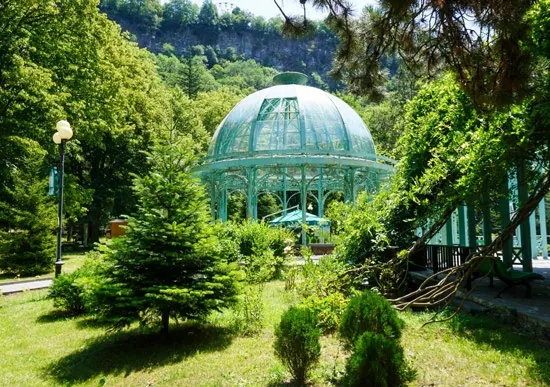
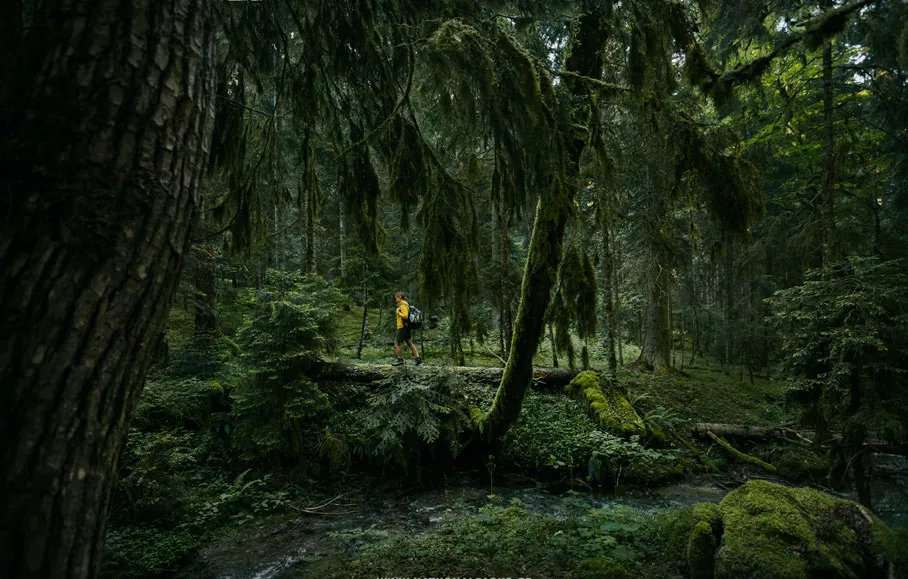
Among Georgia’s protected areas, Borjomi-Kharagauli National Park holds a special place as one of the largest protected areas in Europe. The park’s vegetation is distinguished by its diversity, which is shaped by the botanical and geographical features of its location. Approximately 75 percent of the territory is covered with mixed forests, while the remaining part consists of subalpine and alpine meadows. This creates a rich and harmonious network of ecosystems in which plants and animals coexist.
In terms of fauna, the park is particularly rich. Sixty-four species of mammals have been recorded, 11 of which are endemic to the Caucasus, while 8 species are included in Georgia’s Red List. These include red deer, chamois, roe deer, brown bear, wolf, and lynx. Wild boar, forest cat, and many other species are also found in the protected area, while 20 species of bats have also been recorded here.
Reptiles are also quite diverse in the park’s humid forests. Thirty species have been recorded, 3 of which are endemic to the Western Caucasus, while 2 are included in Georgia’s Red List. Such biodiversity gives the park special importance for nature conservation, as well as for scientific and ecotourism activities.
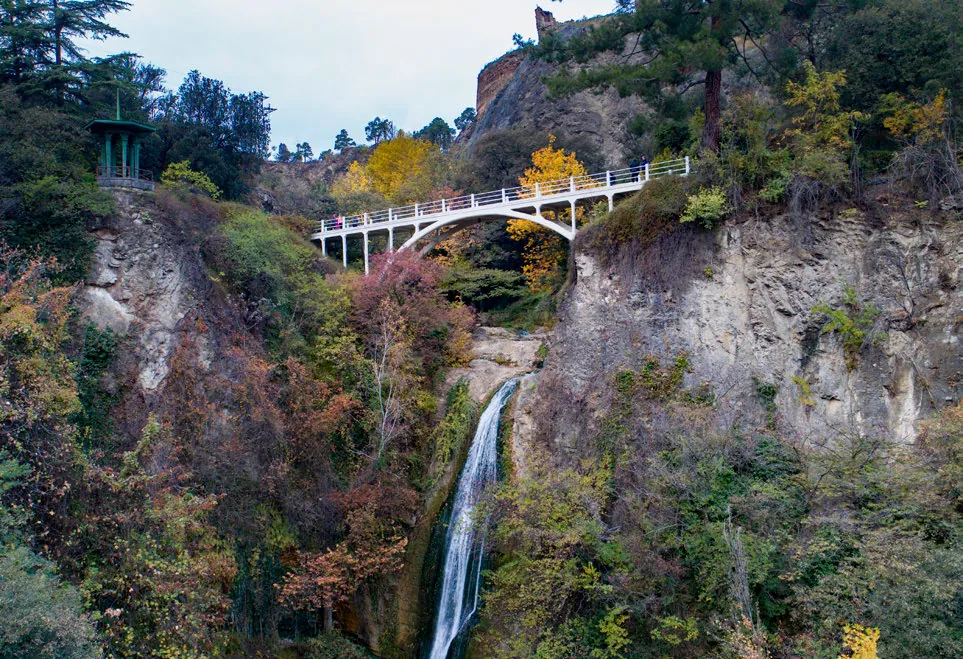
The Tbilisi Botanical Garden, located in the heart of the capital, is another important green space that has historically formed part of the city’s landscape. The garden is surrounded by the districts of Old Tbilisi, Abanotubani and Kharpukh, while the Kojori road runs along its northwestern side. To the east, the garden borders the Narikala Fortress and fragments of the old royal garden.
The Botanical Garden is at once a recreational, educational, and sports space. It offers visitors the opportunity to relax, learn about science, and even try extreme activities. Visitors can see collections of lilacs and coniferous plants, a Japanese garden, waterfalls, bridges hidden among the trees, and fountains. Walking paths and resting pavilions are also arranged throughout the area.
The garden’s infrastructure is diverse: there is a café, a museum, and an event space where wedding ceremonies can be held. Children are provided with playgrounds featuring swings and amusement rides. It is also possible to descend from Narikala Fortress to the Botanical Garden by zip line, and for fans of active recreation, there is a rock-climbing wall. The Visitor Center offers special tours, including educational routes, children’s tours, cycling routes, and excursions by electric vehicles.
Today, the Botanical Garden covers an area of 97 hectares. It presents rich collections of flora from different regions of Georgia and the world, including about 3,500 species, varieties, and cultivars. The garden includes a tropical greenhouse, a plant nursery, and six scientific research departments, making it an important center for both research and ecological education.
These three spaces clearly demonstrate Georgia’s natural wealth and the country’s strong potential for the development of ecotourism.