Spring Retreats - Sound Therapy
ᲗᲔᲐ ᲙᲔᲠᲔᲡᲔᲚᲘᲫᲔ / TEA KERESELIDZE
Sound therapy, a practice widely used around the world, is gradually gaining ground in Georgia. Sound therapy specialist Tea Kereselidze shares, based on her own experience, how this path became both a professional and personal transformation for her, and why vibration can have such a powerful impact on a person’s emotional and physical state that words often fail to describe it.
Sound therapy is still an unfamiliar practice for many people. How did you get into this field, and what personal story led you down this path?
Sound therapy is a widely practiced and well-estab-
lished method worldwide, although it is still relatively new in Georgian society. I am glad that both interest and awareness are growing. Personally, I became interested in this field while living in the United States, where I first learned about these instruments and practices. However, my inner journey began much earlier, at a time when I felt mentally stuck and realized that I was no longer satisfied living according to beliefs that had been imposed from the outside. That was when I began exploring myself, asking questions, and gradually opening space for deeper understanding. This process was accompanied by both emotional and physical changes.
My first real contact with sound therapy happened intuitively. As soon as I learned about this practice, I began studying it independently and soon started practicing it myself. For me, this felt very natural, because I am more action-oriented than conversational. Through this process, I realized that sound therapy allows me to express my caring energy in a healthy way, not from the role of a “savior,” but by creating a space where a person comes, chooses, and goes through their own process. My role is simply to create a safe and supportive environment, and sound is a tool that helps a person relax and reconnect with themselves.
One of the most important experiences for me occurred in Nepal, when a friend of mine, despite serious health problems, underwent sound therapy sessions and, in a short time, experienced significant improvement both physically and mentally. That experience inspired me to study this field more professionally. Later, in Portugal, I received additional training on various instruments, which significantly expanded my perspective and allowed me to make the sessions more diverse and deeper.
How would you explain it simply, what happens in the human body and psyche during sound therapy? Why
does vibration have such a strong effect on emotional state?
Sound therapy is not mysticism. It is the simultaneous influence of vibration on the body, the nervous system, and the psyche. Modern people often live in constant stress and in “survival mode,” where the body has no time to recover or truly relax, and safe, peaceful environments are rare. In this context, sound therapy becomes one of the methods that supports natural relaxation and regulation of both body and mind.
Vibration directly affects the body. Since a large part of the human body is made up of water, sound is not only heard but also physically felt, like a gentle massage that reduces tension. At the same time, the brain automatically adjusts to rhythm, thoughts slow down, breathing deepens, and the nervous system shifts into a state of relaxation. It is in this state that the psyche begins to open. Emotions that have been stored inside begin to surface, giving a person the opportunity to experience and release them. That is why vibration has such a powerful effect on emotional state: it creates a safe space where the body and mind naturally return to balance.
Which instruments do you use most often in your practice - Tibetan bowls, gongs, crystal bowls, or others? What are the different effects of each?
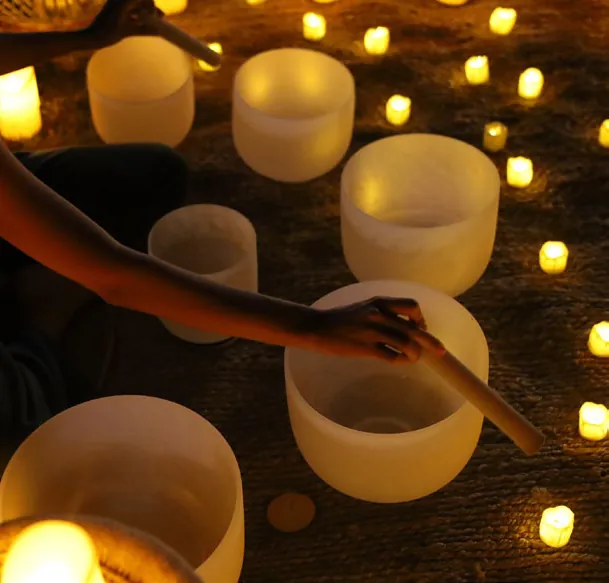
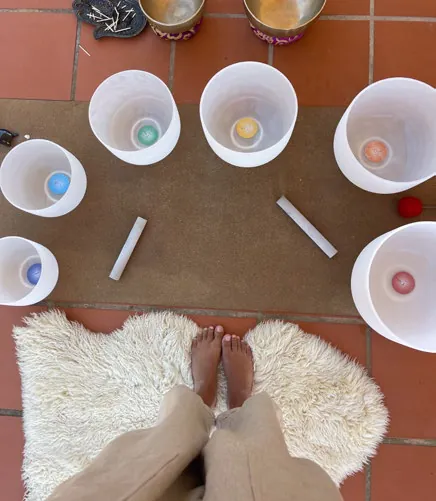
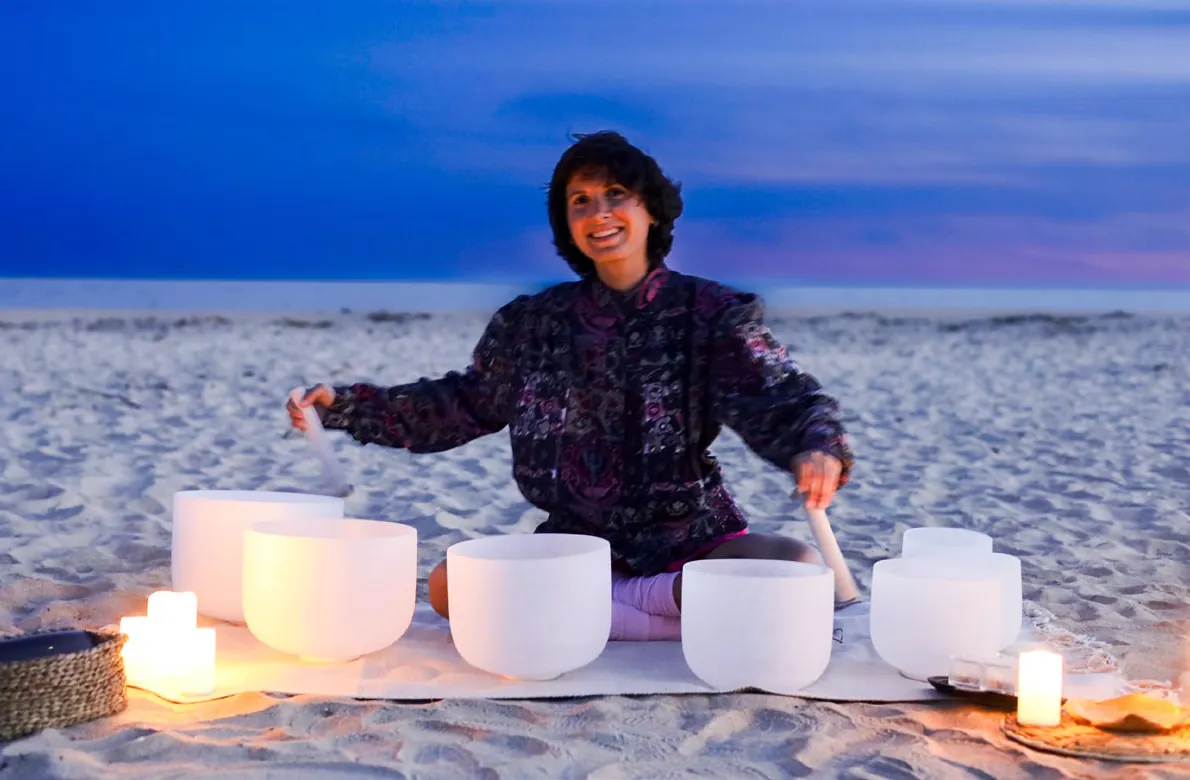
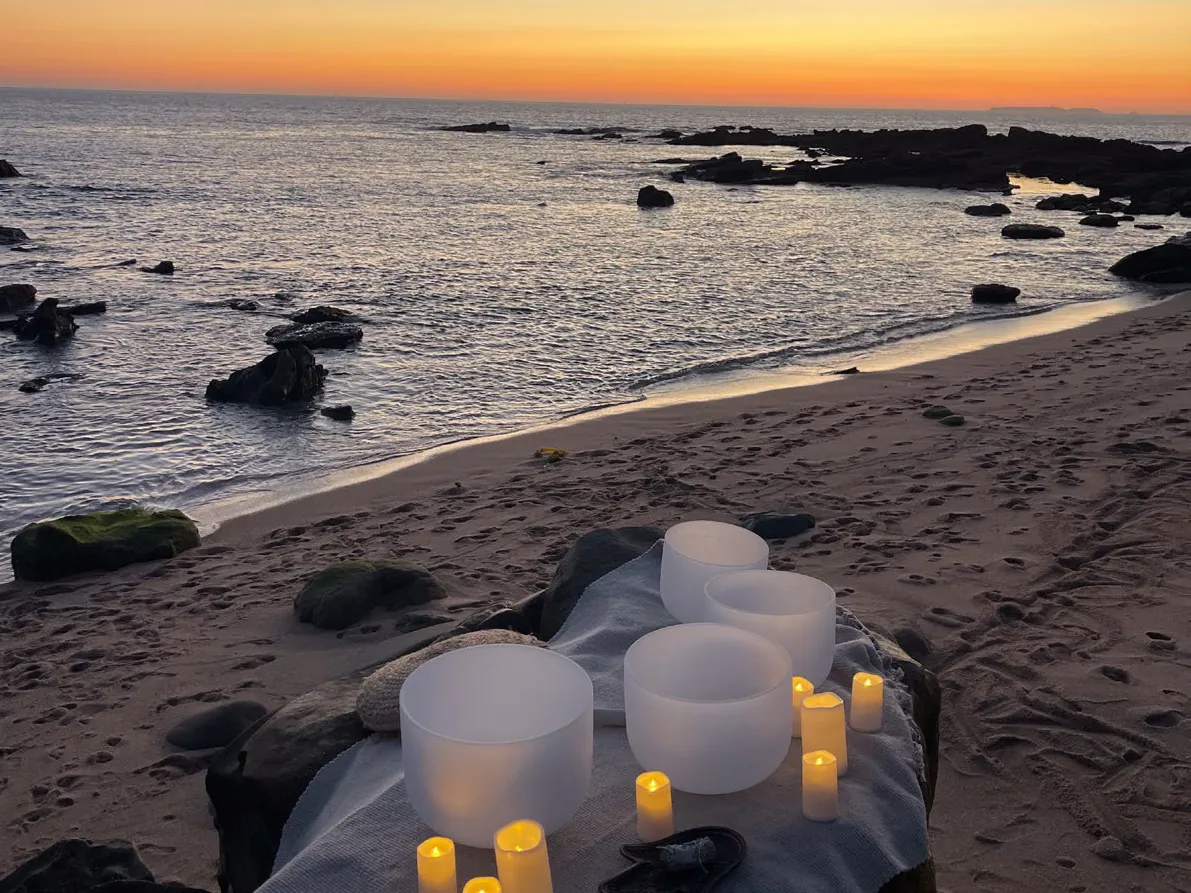
In my practice, I mainly use crystal and Tibetan bowls, along with various smaller instruments, each of which has its own function. I am constantly discovering new sounds, so the range of instruments I use is always growing. In sound therapy, each instrument works on a different level: Tibetan bowls create a deeper, more “earthy” vibration, calming the nervous system, releasing tension in the body, and strengthening the feeling of grounding; crystal bowls are known for their clearer, higher frequencies, which have a strong effect on the psycho-emotional state and often creates a feeling of lightness and release; and the gong creates a powerful sound field that can activate more intense, sometimes transformative processes. Additional instruments, such as chimes or tuning forks, are used to harmonize the space and deepen the process.
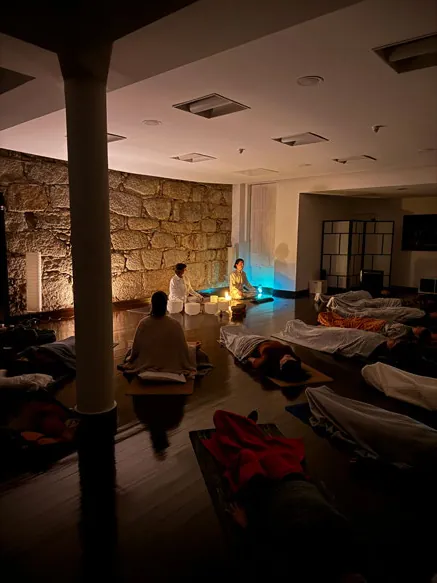
The instruments are not the only important part of the session. I also use voice, guided meditation, electronic music, and scents. As a result, the whole process resembles a kind of inner journey: we begin with sound and concentration of energy, then music, additional sounds, and scents are introduced against a background of relaxation, often followed by a phase of emotional release, and finally a slow return and sharing of the experience. It is important to understand that there is no “right” or “wrong” in this process. Each experience is individual, and my role is to create a safe space where a person can relax and remain present with their own inner process.
You recently conducted retreats in Portugal. How did you end up there, and how was sound therapy received by an international audience?
I am part of the Retreat Tbilisi community and team, and at one point, our retreat leader, Levan Matitashvili, suggested that we continue our activities in Portugal. I happily agreed, and within a week of making the decision, we left, wanting to continue and expand our work there. We had already been working with people in this direction before, and we continued doing so in Portugal as well. For about two years, participants from both Georgia and the international community actively joined us, and we organized various retreats.
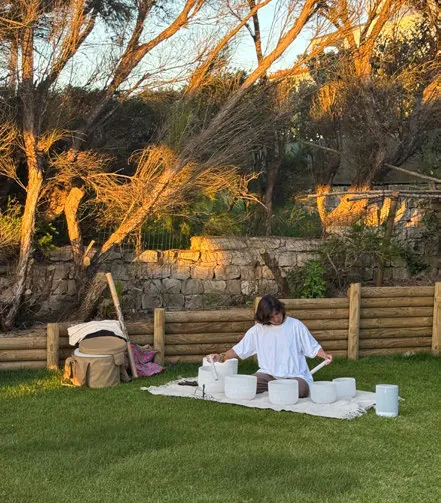
That period was very special for me. In fact, I lived in an environment that I personally call “paradise,” and one in which nature had a great influence on my vision, especially in relation to sound therapy. As for the international audience, this practice was already quite familiar to them. However, it was important and gratifying for me that my own approach also felt deep and therapeutically meaningful to them, because even though sound therapy is a specific method, the final experience depends greatly on the kind of space the facilitator creates and the process through which the person is guided. At the same time, we had the opportunity to work in an environment where experienced representatives of various practices came together, and this exchange of knowledge enriched our work even further.
Which experience from the retreats in Portugal left the strongest impression on you? Was there a participant or a story you remember most?
It would be difficult for me to single out one specific participant or a story, because every person is a unique world. Working with each individual is like a mirror for me, through which I come to know myself more deeply. Still, I can point to the directions that are especially interesting to me: working with addiction and silent retreats.
In cases involving addiction, a person is often in a state of inner conflict, has difficulty concentrating and relaxing, and has lost a sense of safety. So my main task is to create a space where they can gradually calm down. In this process, sound therapy is a supportive tool that helps regulate the nervous system and prepares the person for a deeper therapeutic process already being led directly by an addiction specialist, in our case, Levan Matitashvili.
As for silent retreats, this is one of my favorite formats, where people spend several days together in silence, without external stimulation. In such conditions, a person is given the opportunity to face themselves more directly, reevaluate life, and go through internal processes in a safe environment.
In your opinion, for which psychological or emotional challenges can sound therapy be especially effective?
Sound therapy can be particularly effective in situations where a person feels exhausted, stressed, and has lost inner balance, for example in cases of chronic stress, anxiety, insomnia, emotional overload, or inner tension. It is also often helpful for people who struggle to relax, reconnect with their bodies, or become aware of their emotions. At the same time, it can also be used simply for relaxation, just as the physical body needs exercise and care, our inner world also needs attention.
It is important to note that sound therapy is not a substitute for medical treatment. However, it can be a powerful supportive tool in psychological and therapeutic processes because it helps regulate the nervous system, reduce tension, and create a safe environment where a person can more easily reconnect with themselves and gradually return to inner balance.
If someone has never tried sound therapy and feels a little skeptical about such practices, what would you say to them? Why is it worth trying at least once?
Skepticism is completely natural, especially when it comes to a practice that cannot be fully explained in words. That is why I would say that sound therapy is not something you have to “believe” in, but rather an experience you simply have to feel for yourself. You do not need to know anything in advance, be in a special mood, or “do it right” during the session. It is enough simply to be present and allow yourself to receive the experience.
You might think of it as attending a musical evening and listening to beautiful, interesting, calming music that also happens to be therapeutic. Many people arrive with some doubts and leave feeling calmer, more relaxed, or closer to themselves, and that alone is a good enough reason to try it at least once.