Tbilisi on the World Musical Map
Sometimes the cultural life of a city reaches far beyond its geographical boundaries. For almost three decades, the Tbilisi International Piano Competition has brought together young pianists, leading professors from around the world, and members of the international music community in Tbilisi.
The Competition was founded in 1997 on the initiative of Georgian pianist and Tbilisi State Conservatoire Professor Manana Doijashvili. Thanks to the professional authority and tireless work of its founder, the Competition soon established itself in the international music world. Since its foundation, it has been held every four years with the support of the Ministry of Culture of Georgia and Tbilisi City Hall. Today, it is not only a respected piano competition, but also an important part of Georgia’s cultural life.
The Competition’s main mission has remained unchanged over the years: to preserve and develop the traditions of the Georgian piano school, support the professional growth and international careers of young musicians, and promote Georgia’s cultural presence internationally.
The 2026 edition continues this mission. It took place from 5 to 16 October at the Tbilisi State Conservatoire Grand Hall. Following the preliminary selection, 27 young pianists from different countries have been admitted to participate. All contestants will perform in Rounds I and II, with 10 advancing to the Semifinal and 6 taking part in the Final. The Jury brings together renowned musicians and pedagogues from around the world.
The Competition carries special significance this year:
it is dedicated to its founder and guiding spirit, Manana Doijashvili. The Competition she founded continues along the path she created and developed over many years. The 2026 edition carries this tradition forward under the leadership of the new Artistic Director, Alexander Korsantia.
The Competition’s international reputation is further strengthened by its professional affiliations. It has been a member of the World Federation of International Music Competitions (WFIMC) since 2002 and of the Martha Argerich and Gustav Alink Foundation since 2007.
An event of this scale cannot exist through the efforts of one organization alone. Behind it are people and institutions that recognize the role of culture both in raising the country’s international profile and in contributing to the development of society.
The international scope of the Competition and its place in Georgia’s cultural life demonstrate how naturally culture, international relations, and the country’s contemporary image can come together. Supporting projects of this kind creates opportunities for Georgia to be represented even more actively on the world cultural map.
One of the Competition’s important supporters is Georgian Airways, which has extensive experience working with international cultural projects. Aviation connects people and countries, while culture gives meaning to these connections. We are grateful to Georgian Airways for its partnership and support.
In October 2026, Tbilisi will once again welcome music that transcends borders – and young pianists for whom the VIII Tbilisi International Piano Competition may become the first chapter of a major artistic journey.
www.tbilisipiano.org.ge
THE POSTAGE STAMP – A SMALL PIECE OF PAPER WITH A REMARKABLE HISTORY
It is tiny, just a few square centimeters of paper, often noticed only in the corner of an envelope. Yet a postage stamp is far more than proof that a letter has been paid for. Within its small frame, it can capture a country’s history, culture, art and nature – even the spirit of an entire era.
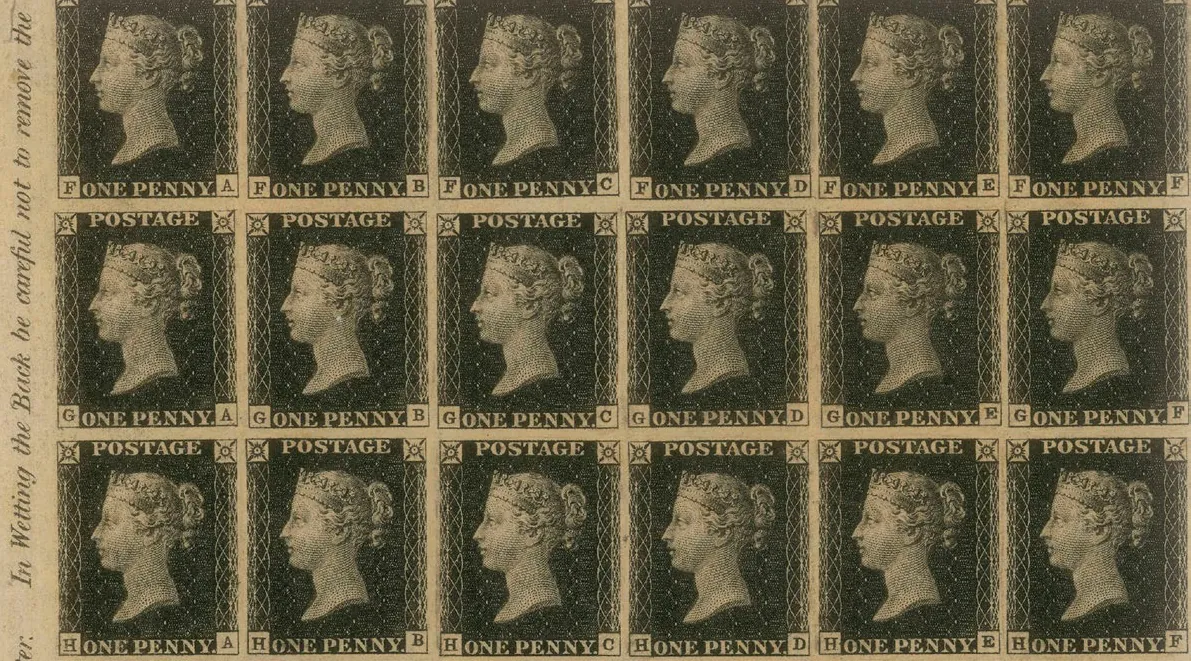
The modern history of the postage stamp began in the 19th century, as the way letters were sent gradually began to change. The world’s first postage stamp, Britain’s Penny Black, was issued in 1840. Bearing the profile of Queen Victoria, this small black-and-white stamp marked the beginning of a new era in postal history.
Georgia has its own remarkable place in that story. The Tiflis Unique, issued in 1857, was used as proof of payment for mail carried between Tbilisi and Kojori. Today, it is regarded as one of the world’s rarest and most valuable postage stamps.
The first national postage stamp of independent Georgia was issued on May 26, 1919, during the period of the Democratic Republic of Georgia. Dimitri Shevardnadze is generally considered its designer, although researchers have also suggested that Ioseb Charlemagne and Heinrich Hryniewski may have been involved in its creation.
Following the Sovietization of Georgia in 1921, the issue of national stamps came to an end. During the Soviet period, stamps featuring Georgian subjects continued to appear, but neither the word “Georgia” nor Geor- gian-language inscriptions were printed on them. After the restoration of independence, Georgia resumed issuing its own national stamps. New stamps have been issued in the country’s name since 1993, commemorating important events, cultural heritage and notable figures.
Many people will still remember the particular excitement of carefully opening an envelope that had arrived from abroad, removing or saving the stamp without damaging it, and then arranging it by theme in a thick, beautifully kept album – animals, space, art, sports... For children, swapping stamps in school corridors or neighborhood courtyards could become an adventure in itself. For adults, collecting offered another kind of pleasure: a way to discover the wider world, imagine distant countries, and experience the thrill of building a collection.
Yet the postage stamp has not become merely a relic of the past. In 2026, Georgian Post continues to issue new stamps celebrating significant figures and events in Georgian culture, science, art and sport. This year’s issues include stamps marking the 150th anniversary of Ivane Javakhishvili, the 100th anniversary of Nana Mchedlidze, as well as stamps dedicated to Davit Tsimakuridze, the 125th anniversary of Mikha Khelashvili, and other notable figures and events. A Georgian stamp festival was also held this year, once again bringing attention to the postage stamp as an important part of the country’s history and culture.
A stamp may fit in the palm of your hand, yet the story it carries can be far larger. A country, a person, a city, a work of art, or a defining event – any of them can find a place within just a few square centimeters.
And perhaps that is the true charm of a postage stamp: it begins as part of a message, yet often becomes something far greater than the message itself – a small piece of paper carrying a remarkable history.